K-12 schools in Minnesota are funded by a combination of state aid and local property taxes. Some school districts operate in communities that have a low tax base, though, making it difficult to provide comparable services to those available in communities with a high tax base.
In an acknowledgement of the potential education inequities this could cause, the state provides “equalization aid” for school districts to lessen the local taxpayer burden of certain property tax levies.
However, the rates of aid have remained unchanged for many years. Some lawmakers believe now is the time for the state to increase equalization aid under various circumstances.
On Tuesday, the House Education Finance Committee approved three bills pertaining to this issue — HF879 (as amended [https://www.house.mn.gov/comm/docs/eEls-j2Xq0eCxjkFwmBr9Q.pdf]), HF1271, and HF1396. All three are now heading to the House Taxes Committee.
“Equalization helps level the playing field for the property-poor districts,” said Rep. Cheryl Youakim (DFL-Hopkins). By looking at the value of taxable property within a school district’s boundaries, calculations are made to provide state aid, helping some districts shoulder the costs of particular school levies.
Youakim sponsors HF879, dealing with equalization aid in regard to local optional revenue, a subsection of each district’s general education revenue. She said local optional revenue rates have remained frozen since 2013, even as inflation has soared. Her bill would both simplify the formula calculation for determining state aid and substantially increase the assistance to local districts.
In fiscal year 2025, districts would receive $840 per pupil unit as a starting point and would then be equalized at $880,000 per pupil unit. In subsequent years, the former number would automatically increase in conjunction with any basic formula increases.
Ann-Marie Foucault, superintendent of St. Michael-Albertville schools, noted her district has faced significant budgetary shortfalls in recent years as state funding has not kept pace with inflation. Her district could net another $845,000 in state aid and hire another 11 teachers if this bill passes.
Youakim also sponsors HF1271, which would increase equalization aid for the operating referendum program. This program empowers local districts to gain voter approval for increasing their general fund revenue beyond the limits set in state statute. Youakim’s proposal would increase the equalization factor to 150% of the statewide referendum market value per pupil unit for one tier of this program.
She argues this is necessary because statewide referendum market value has skyrocketed 300% since the equalization factor was first established nearly 30 years ago. The change would take effect in fiscal year 2025 and is estimated to reduce local property tax levies used to raise this revenue by nearly $90 million per year.
The last bill in the package is HF1396, sponsored by Rep. Amanda Hemmingsen-Jaeger (DFL-Woodbury). It would increase access to, and raise payouts from, the debt service equalization program, which assists low property wealth school districts in paying off debt incurred via new construction building bonds. Her proposal is expected to lower local property taxes by about $41 million per year beginning with fiscal year 2025.
The trifecta of bills drew bipartisan support, notably from Rep. Nolan West (R-Blaine).
“This benefits people across the state, and I appreciate [how these bills would take] a more statewide approach,” he said.
Two longtime legislators representing St. Louis Park, Hopkins and a section of Edina find themselves in influential positions this year.
Sen. Ron Latz (DFL-St. Louis Park) is prominently the chair of the Senate Judiciary and Public Safety Committee while Rep. Cheryl Youakim (DFL-Hopkins) is the chair of the House Education Finance Committee.
Latz is working with Zaynab M. Mohamed (DFL-Minneapolis) on legislation that would increase penalties for a broader range of crimes when they are motivated by bias.
“It would enhance training for police officers and the community to recognize when crimes are motivated by bias, which are particularly pernicious beyond the individual victim,” Latz said. “They’re really crimes against whole communities that are represented by the particular cultural, religious or gender affiliation of the victim.”
The state already has penalty enhancements for hate crimes involving assault, but the legislation would expand the list of applicable crimes.
Latz is continuing to carry gun legislation that would expand criminal background checks when firearms are acquired and would enable courts to confiscate firearms “from people who are exhibiting signs of dangerousness to themselves or others,” he said.
Asked whether he expected the legislation to pass this year, Latz responded, “It’s never been an easy lift. I don’t expect it to be an easy lift now, but we will do everything we can to pass both of them.”
DFLers will likely also consider approving laws requiring firearms to be stored with gun locks and requiring gun owners to report firearm thefts, which Latz said could help prevent incidents in which young people obtain their parents’ guns, for example.
Latz also anticipates reviewing marijuana legislation on the judiciary committee and as a member of the Senate Commerce and Consumer Protection Committee. He is not working directly as an advocate for the bill to more broadly legalize cannabis, but he said he does support it. On the question of whether local governments should be able to prevent the sale of products in their communities, Latz said he believed the law should be uniform statewide. He made an analogy to the Clean Indoor Air Act, which prevents smoking cigarettes or vaping inside bars and restaurants statewide, without the ability for a local government to opt-out.
While DFLers can act without Republican support on most legislation this year, the parties would have to work together if they approve a bonding bill to provide funds for local and state projects. A borrowing bill would require three-fifths of legislators in each chamber to support it.
“I’m hopeful, but we’re going to have to find a way to get a strong bipartisan consensus,” Latz said.
While many interests are vying for state funding this year given a forecast for a state surplus of $17.6 billion, Latz cautioned that $11.6 billion of that is one-time money that could not be used for ongoing expenses. Additionally, he said inflation has an impact of about $5.5 billion to maintain current levels of service.
“I’m trying to temper expectations,” Latz declared. “We don’t have gobs and gobs of money to spend.”
Some lawmakers hope to change the forecast process so that it factors in inflation along with expected increases in revenues. Politicians from both parties supported the current forecasting method that does not include inflation when considering expenses.
“It was never a good fiscal or budgeting approach, and we’ve regretted it ever since because everyone has these expectations and everyone gets their hopes dashed,” Latz said. “It’s kind of a mess.”
Youakim’s focus
Meanwhile, Youakim said she is laser-focused on education finance, which makes up 40% of the state’s budget.
She said she is working with the education finance teams of the House, Senate and governor’s office “to make sure we get our students what they need to learn and have an environment where they feel safe.”
Topics include increasing state funding for special education and English language learner programs so that they are not a strain on local school district budgets. Additionally, legislators are considering funding school breakfasts and lunches for all students. Federal funds helped provide meals at no cost to students during much of the pandemic. However, the system in which some students pay full price while others from lower-income households pay a reduced price or no cost has returned. Advocates of free meals for all say it would eliminate a stigma associated with free and reduced-price lunches for some students. The bill cleared the House Education Policy Committee, which Youakim also serves on, before heading to her education finance committee.
Legislators are also considering more funding for mental health support staff in schools through additional counselors, social workers and school nurses.
Youakim is seeking to provide funding to train paraprofessionals and education support professionals in schools. Districts would control the training, which could focus on responding to the cultural, social, emotional and medical needs of students. Youakim has worked as a paraprofessional on and off since 2014 and currently works as a substitute paraprofessional in St. Louis Park and Hopkins.
Discussions on the increase for the formula for state aid overall for school districts are underway. One bill would index the state support for school districts to inflation and would increase the amount by 5% in the next two-year state budgeting period. The bill would add another 5% to the formula in the following two-year period.
However, Youakim said, “These are all proposals that are going to have to work through the committee process.”
She is supporting a grant request from Building Assets – Reducing Risks, an organization with ties to St. Louis Park High School that focuses on ensuring teachers build relationships with students.
In another request relevant to constituents, Youakim and Latz are supporting changes to special rules for a Hopkins tax-increment financing district that would give the city more flexibility when it provides city assistance to building projects. The bill would allow the city to spend more money on housing and blight correction in areas outside the official TIF district, among other changes.
Youakim is also supporting a bill that would allow any Minnesotan to file state income taxes for free. Programs the Minnesota Department of Revenue lists online offer free electronic filing for taxpayers with an adjusted gross income of up to $41,000, a cap that increases to $73,000 or less for active-duty military members.
The challenge of buying a used vehicle might involve fewer unknowns thanks to one of several new laws passed during the Minnesota Legislature’s 2022 session, which took effect Jan. 1.
The law, sponsored by state Rep. Cheryl Youakim, DFL-Hopkins, and Sen. John Jasinski, R-Faribault, will help buyers seeking older, less expensive, vehicles will find out when the vehicle they’re considering has previously been significantly damaged or deemed to be totaled.
The law updates the state’s salvage title regulations by creating a “prior salvage” brand. It aims to solve an issue of less expensive vehicles holding a clean Minnesota title, despite incurring damage that costs more than 80% of its value or causes an insurance company to declare the vehicle a total loss. The requirements for a “salvage” brand on high-value or late-model cars — those costing $9,000 or more or are five years or newer — remain the same.
Based on recommendations developed by a Salvage Title Task Force, the law broadens disclosure requirements to include all brands on the title, requires written notice from dealers that must be signed by the purchaser, and clarifies that oral disclosure is not required for online sales.
In-state and out-of-state vehicles will be treated consistently. Motorcycles as well as heavier commercial vehicles are now subject to the same title branding and disclosure requirements as other types of vehicles.
The law also makes clarifying changes for readability of the statutes and to conform to Department of Public Safety titling and branding practices.
Postnatal care coverage required
One of the new laws taking effect Jan. 1 was actually passed in 2021, and made changes to private and public health coverage. Among its provisions, health plans will be required to cover:
a comprehensive postnatal visit with a health care provider not more than three weeks from the date of delivery; any postnatal visits recommended by a health care provider between three and 11 weeks from the date of delivery; and a comprehensive postnatal visit with a health care provider 12 weeks from the date of delivery.
The law was carried by Rep. Zack Stephenson (DFL-Coon Rapids) and Sen. Gary Dahms (R-Redwood Falls).
Consumers’ financial interest comes first
Another new law updates best interest standards in annuity sales to help protect consumers, especially older adults. Insurers can not put their financial interests ahead of the consumer.
According to the new law, when recommending an annuity, insurance agents should follow revised National Association of Insurance Commissioners standards, satisfying four conduct obligations: care, disclosure, conflict of interest and documentation. Under the law:
producers have a care obligation to know their customer and have a reasonable basis for their recommendation; producers have an obligation to disclose their licensing and how they will be compensated for the sale. For example, if they will be paid by commission or an asset management fee; producers must avoid and disclose conflict of interest, including sales incentives such as quotas, bonuses, or limited time contests; and producers have an obligation to document the basis of their recommendations.
Franchise renewal date changed
A new law, effective to initial registrations filed on or after Jan. 1, 2023, changes the due date for franchise renewals.
The deadline to renew a business registration will be the anniversary of the initial registration instead of 120 days after the end of the fiscal year.
Ericca Maas, director of policy and advocacy for Think Small, which administers the scholarships in Hennepin and Ramsey counties, said this week the group will continue to promote a middle-income expansion, even with legislators preaching austerity.
I hope this email finds you staying well and enjoying the cooler temperatures and the leaves changing. Fall also brings elections season. Here is your quick reminder that there are local elections coming up on November 7th in many of our communities. You can find out about your local election here.
This fall has also brought devastating news from across the globe, with the terrible loss of life in the Jewish and Palestinian communities. As the conflict in the Middle East grows between Israel and Hamas, I offer my heartfelt condolences to the victims who have lost their lives or those of their loved ones. I pray for those struggling for peace, safety, and the ability to live with dignity in Israel, Gaza, and the West Bank. I believe that we are at our best when we try to see the humanity in one another. As a state legislature, we do not influence federal policy. But, I personally continue to support peace efforts in the region, a return of hostages, and humanitarian aid to the people of Gaza.
We’ve also seen loss of life here with the recent mass shooting in Lewiston, Maine. It’s clear that thoughts and prayers are not enough; we need strong public policy to help put an end to senseless gun violence. I’m proud of the work we’ve done here in Minnesota in passing the Red Flag law and universal criminal background checks, but we still have more work to do.
As we all follow news around the world and country, I thought I’d give you a local update from the our community and what has been going on in September and October:
Tribal-State Relations Training
Lining up with Indigenous Peoples’ Day on Monday October 9, members of the Minnesota House of Representatives, the Minnesota Senate, and folks from state agencies participated in Tribal-State Relations Training on Wednesday, October 11th and Thursday, October 12th.
The training’s goal was to educate legislators and other attendees – including leadership within the executive branch – about American Indian tribal governments, histories, cultures, and traditions, and to help state leadership work more effectively with tribal governments and American Indians. Attendees learned about the history of federal Indian policy; the unique relationship between tribal, state, and federal governments; ways in which differences can be resolved through understanding, mediation, agreements, and partnerships; issues which the state of Minnesota and the tribes in Minnesota may differ on, and how work of the Legislature interconnects with the tribal nations.
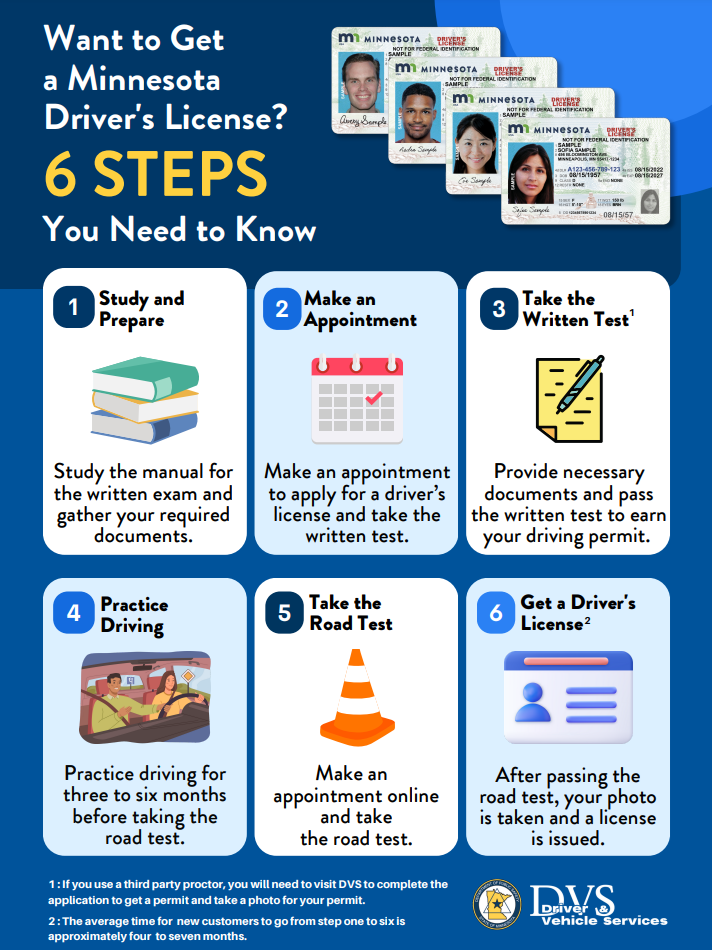
Driver’s Licenses for All
On October 1, Driver’s License for All went into effect. Not only will this law make it easier for Hopkins, St. Louis Park, and Edina families to navigate every-day life, but it will make our roads safer by discouraging driving without a license or proper insurance.
The ability to earn a driver’s license was a right previously held by all Minnesotans – regardless of immigration status – until it was removed 20 years ago. Under DFL leadership, restoring the right to earn a driver’s license was one of our top priorities, and we delivered for our neighbors so they can safely pick up their kids from school, buy groceries or medications, get to work, and so much more. I’ve been a longtime supporter of this measure and it’s been rewarding to be a part of the bipartisan coalition that has worked so hard to see this become a reality. More information about how to schedule a written or behind-the-wheel test, including requirements needed, can be found here.
Minnesota Historic Tax Credit
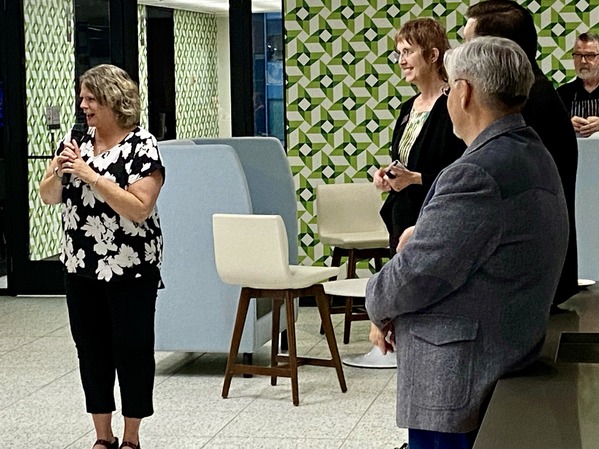
I was also excited to have celebrated the multi-year advocacy effort of the Minnesota Historic tax Credit. As the chief House author of this legislation for many years, the MN HTC program is necessary in the financing of rehabilitating historic buildings across Minnesota. Projects are moving forward that will create new opportunities for housing, entrepreneurship, and tourism, while also creating local jobs and the construction trades.
High School Page Program Seeking Applicants
Applications are open for the High School Page Program with the Minnesota House of Representatives! High School juniors are invited to apply for a weeklong learning opportunity at the state capitol to work directly with state representatives on committees and during proceedings on the House Floor. Applications are due November 22nd. Please feel free to share this with your networks and any high school junior who may be interested in participating. More information, including how to apply, can be found here.
Connected to Community
Hopkins/Minnetonka Fire and Police Chili Cook-Off
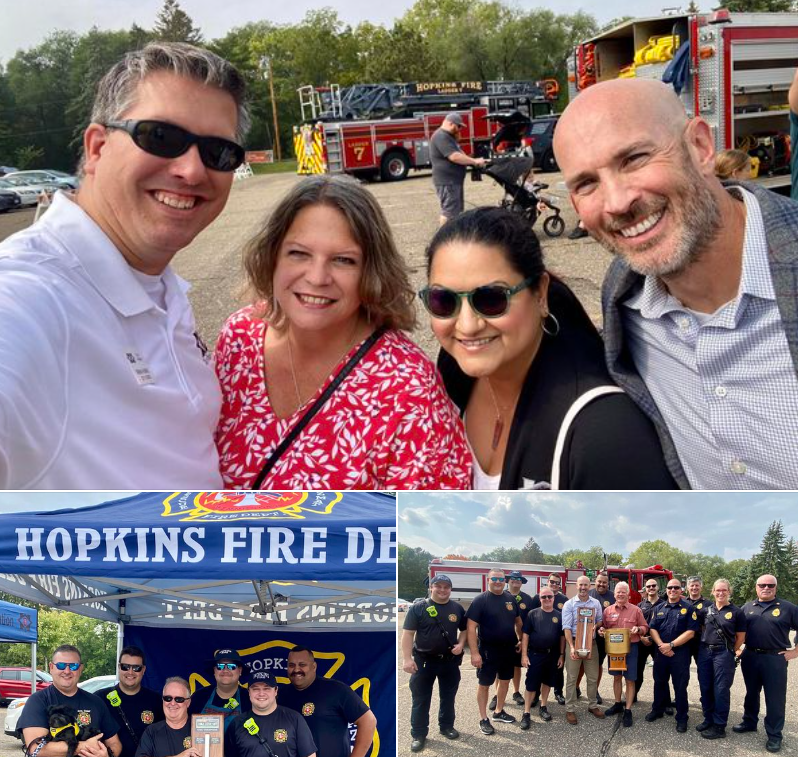
I had a wonderful time at the Hopkins/Minnetonka Fire and Police Department chili cook-off last month! Delicious chili, an opportunity to get caught up with friends, and to the ICA food-shelf. Hopkins Fire Department won the local chef’s 1st place award with their brisket chili!
Visit to Groves Learning Organization
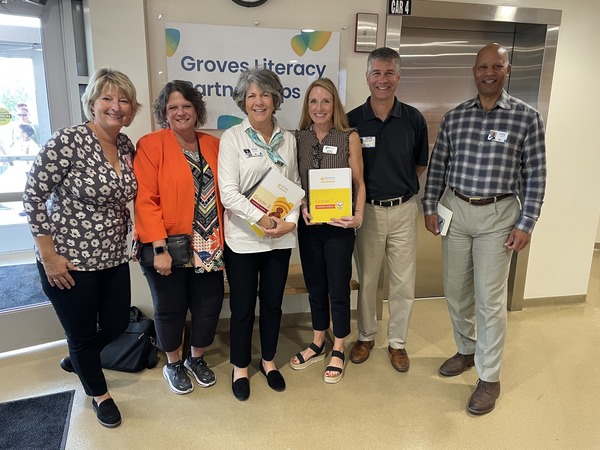
In September, Rep. Larry Kraft and I visited Groves Learning Organization (formerly Groves Academy) in St. Louis Park. We discussed the investments the legislature delivered via the Read Act, and to see their recent repair to a portion of their building. The Groves Learning Organization has been a leader in working with students in all areas of literacy and those who experience learning challenges.
Kid Zone Visit
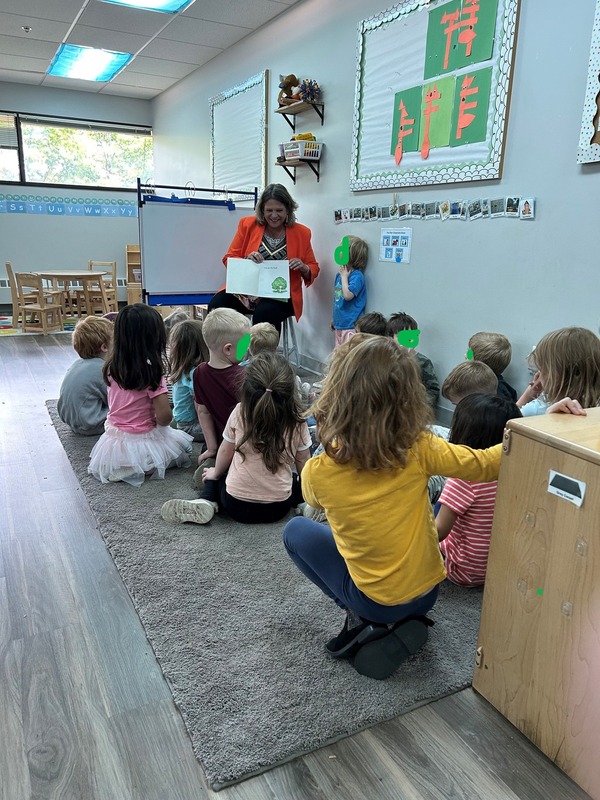
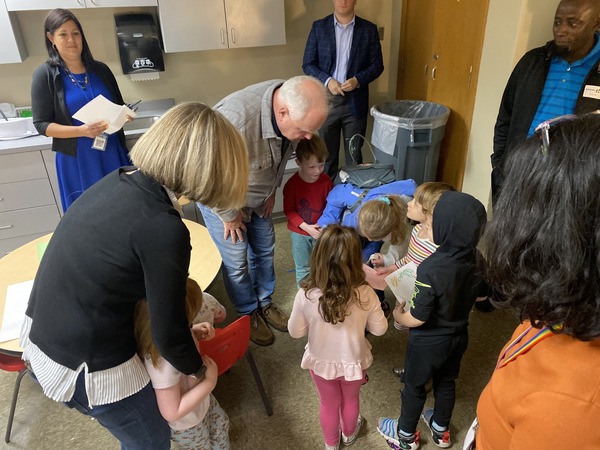
I had the opportunity to tour Kid Zone early childhood center with Director Marcy Dearking and board member Jamie Holm. Kid Zone is a wonderful asset to our community. Thank you for all you do for our kids!
Visit to Rise on 7 and Rise Early Learning Center
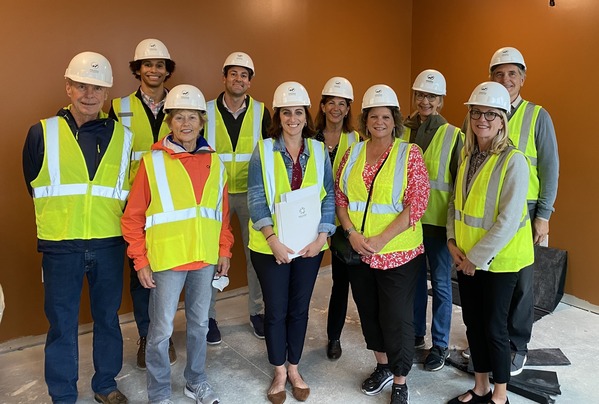
I am very excited for this new addition to St. Louis Park. Common Bond worked with housing advocates and other stakeholders to develop affordable housing on the former Prince of Peace Lutheran Church site just south of Knollwood Mall. They have also partnered with Rise Early Learning Center to create an affordable childcare opportunity to those in the building and the surrounding community. Combining affordable housing with affordable childcare for our families is something that is needed and I would like to see expand across the state.
Normandale Visit
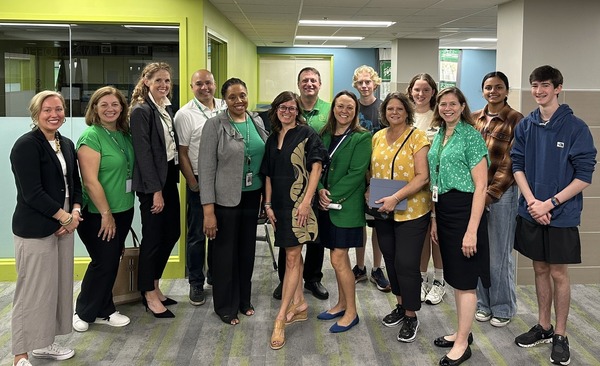
I had the opportunity to visit Normandale Community College and hear about the programs they have in place to increase the number of students going into the teaching profession. College President Dr. Joyce Esther and her team are doing incredible work, especially in the area of increasing future teachers of color and indigenous teachers for our classrooms.
Speaking to students at the Humphrey and Macalester
Thank you to former Senator and now Professor Steve Kelley for the invitation to speak to his Education Law and Policy class at the Humphrey Institute on Public Policy. I was joined by former schoolboard member Andrea Cuene. The questions the students asked brings me hope for our future leaders in public policy.
I would also like to thank Professor Lesley Lavery for inviting me to speak to her class on education politics and policy. I was on a panel with Principal Timothy Williams and Principal Sarah Lightner from two St. Paul Public Schools. Students had thoughtful and provoking questions on school funding and the role of the state and the local elected officials.
Edina Schools Tour
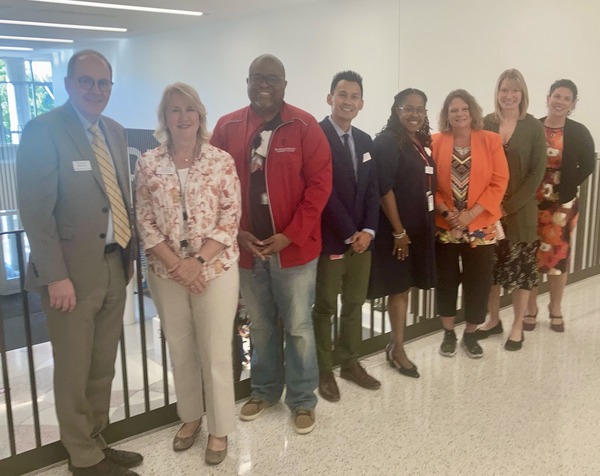
I was excited to recently share the morning with Edina Superintendent Stacie Stanley, School Board Members, the Legislative Action Committee touring Cornelia Elementary, Southview Middle School, and the Edina High School hearing about great initiatives they’re working on.
Governor Walz visits Eisenhower Elementary
Governor Walz even visited Eisenhower Elementary in Hopkins this year to kick off a statewide tour highlighting investments made in pre-K this past session. Because of increased investments, 9,000 children will attend pre-K that would not have otherwise, saving families money and expanding access to early childhood education. Without this funding, Eisenhower Elementary would have lost many of their pre-k seats.
MyHealth Visit
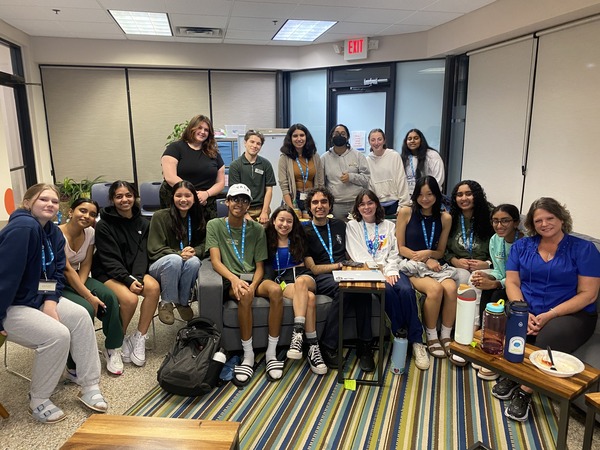
I also met with the MyHealth student board stuff to learn more about the outreach they are doing with their peers on access to mental health, reducing vaping, and access to reproductive care. MyHealth, which is now located in Hopkins, has been a clinical program that for over 50 years providing comprehensive, preventative, and youth-centered medical care.
Edina Morningside Rotary
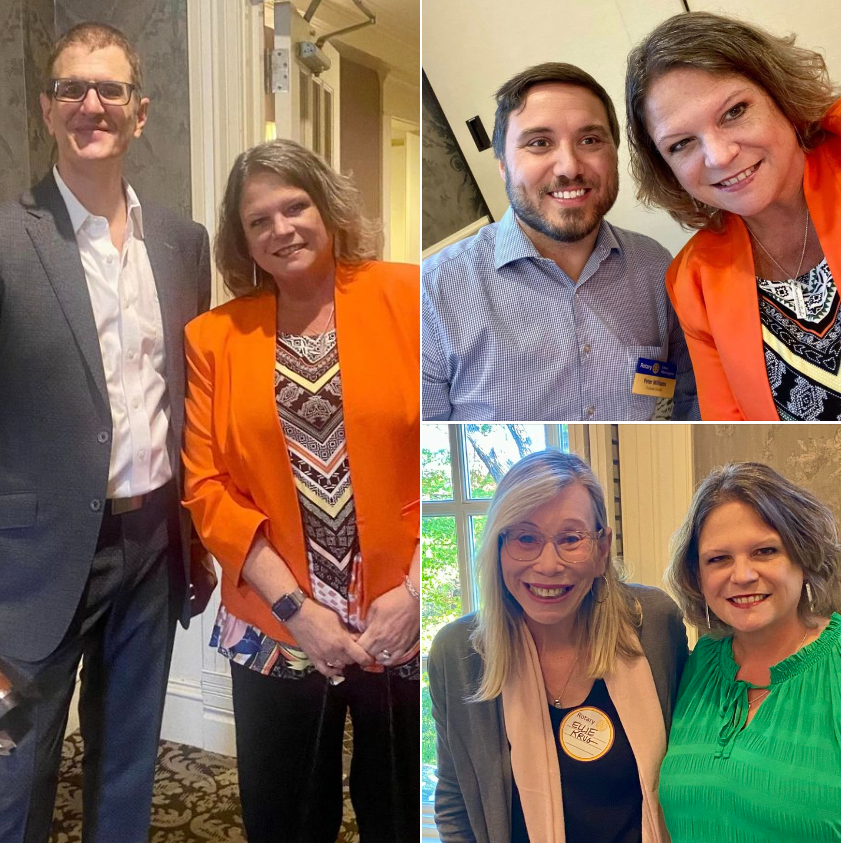
Thank you to the AM Edina Rotary and Peter Williams for the warm welcome late last month! Joseph Haj, the Guthrie’s Artistic Director, was an inspiring speaker who talked about how theater saved his life and how it helps us to interact with the world around us. The arts has the awesome power to bring humanity together. This month, I also attended a meeting where local lawyer and motivational speaker Ellie Krug presented. She spoke very personally about the struggle our transgender community members face when it comes to equal rights in employment, healthcare access, and in many of our communities in general.
Minnesota School Social Workers Association Legislator of the Year Award
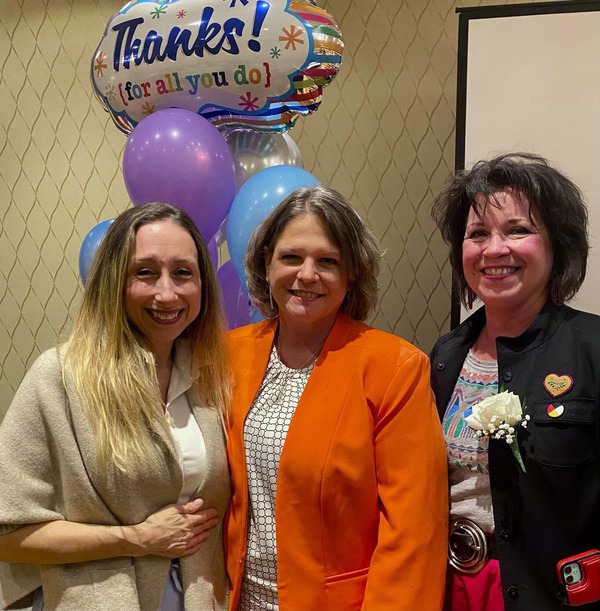
Earlier this fall, I was honored to have received the Legislator of the Year Award from the Minnesota School Social Workers Association. This year, in large part due to MSSWA’s advocacy, the legislature was able to expand access to federal funds for our school social workers who are doing incredibly important work with our students. We know students cannot learn if their mental health and physical needs are unmet; I am grateful to have received this distinguished award.
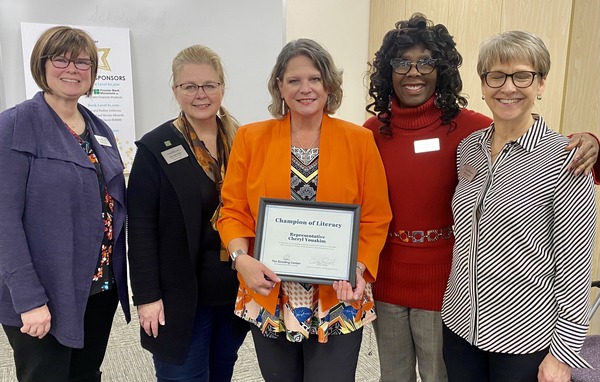
A crucial component of our education budget this year was the investment we made in evidence-based literacy programming and dedicated funding for schools to access curriculum and training for their teachers. I thank the Reading Center’s advocacy in helping get this across the finish line for Minnesota students and families. And a special thank you to Rep. Heather Edelson for being a steadfast champion for this important piece of legislation.
Keep in Touch
Please continue to reach out anytime with input, questions, or ideas at rep.cheryl.youakim@house.mn.gov or 651-296-9889. Email is the quickest way to get in touch.
Thank you for the honor of representing our Hopkins, St. Louis Park, and Edina neighbors at the State Capitol.
Thank you to the Edina LWV for hosting a candidate forum for SD46B & SD46. There were great questions and conversations that mirror what I am hearing when I talk to folks at their doors. Check out the forum here https://youtu.be/1oExWscJv6k.






Recent Comments