The legislative session adjourned Monday as required by the Minnesota Constitution. Per the constitution, we needed to take action on all bills before midnight on Sunday. House members worked around the clock to resolve our differences and craft bills that would be able to pass in both the House and Senate and be signed into law by Governor Walz. While we were able to pass supplemental budgets for veterans and agriculture, smaller policy bills for HHS and Commerce, as well as some individual policy bills, there are important items still left on the table.
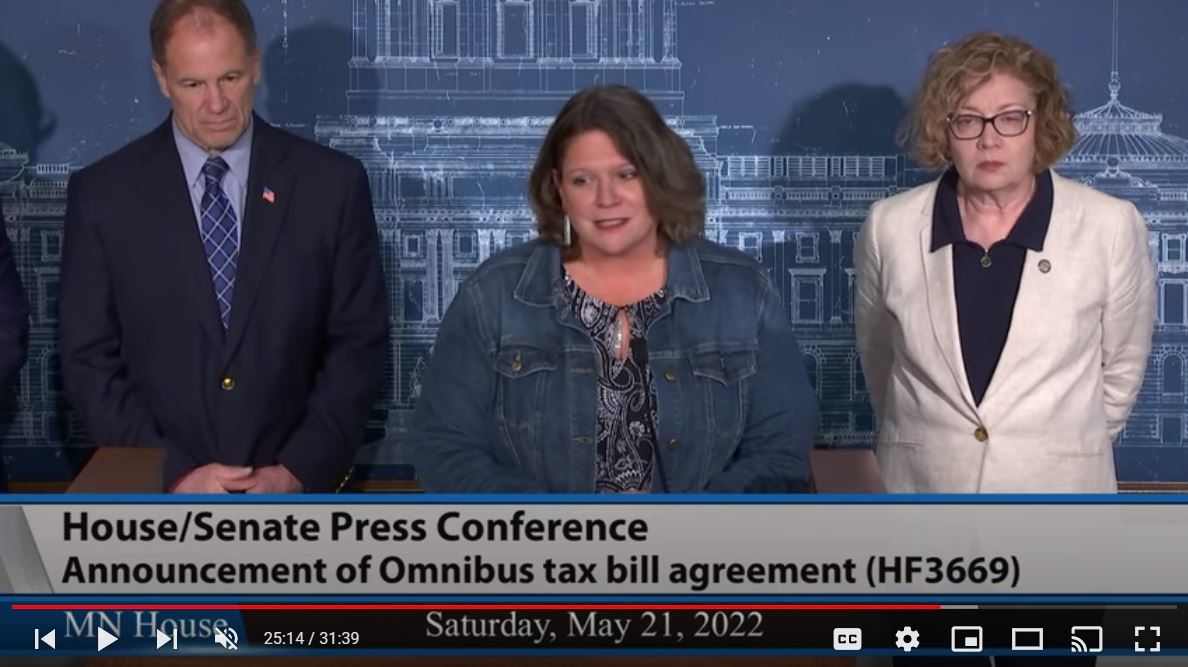
Earlier this month, Speaker Hortman, Senate Majority Leader Miller, and Governor Walz signed an agreement on a budget framework for the end of session: $4 billion in tax cuts; $4 billion in investments; and $4 billion on the bottom line, in case of a future economic downturn. As the House Property Tax Chair, I am personally frustrated that an extremely good bipartisan tax bill is still waiting in the wings. You can watch the bipartisan press conference that we held on Saturday to reveal what was included in the compromise bill.
After a tax deal was negotiated and finalized, ready for passage, the Senate went back on their word to agree with the overall budget framework and time ran out. Regardless of your politics, when you give someone your word and sign an agreement, you honor that agreement. Integrity matters to Minnesotans. It is my hope that Governor Walz is able to work with leadership on an agreement that will bring us into special session to finish those agreed upon bills.
Other budget items on the “to-do” list are transportation; long-term care; health and human services; public safety; state government finance; higher education; housing; and workforce development. While I’m not holding my breath, I remain cautiously optimistic that the GOP Senate will agree to come to the table and finish the job Minnesotans elected us to do. All of this work will need to be completed as soon as possible.
Tragedy in Buffalo and Uvalde
There are no words to express the profound grief and pain with ten people in Buffalo brutally killed, three people injured, and a surrounding community forever changed, all motivated by senseless hate. As reports continue to be released, it’s alleged the suspect published a 180-page document that repeats a series of white supremacist ideologies and racist conspiracy theories referred to as the “Great Replacement” as justification for a premeditated plan to search out Black people and murder them.
In 2020, the Minnesota House became the first legislative body in the nation to declare racism a public health crisis with the passage of House Resolution One creating the House Committee of Racial Justice.
And then Tuesday our hearts were broken again when in Uvalde, Texas there was a horrific school shooting of 19 children and two teachers. This is the second deadliest school shooting in U.S. history. Words cannot express the grief we all feel for the families of those precious children and their two teachers. We must work swiftly together now to save more lives.
In 2020, the Minnesota House passed common-sense background checks and red flag laws. The Senate wouldn’t even hold a hearing. We must act because our children deserve a future without this senseless and preventable violence.
Update on Frontline Worker Bonus Pay
The application process is expected to open June 8 through July 22, 2022. These dates are subject to change. Learn more at https://frontlinepay.mn.gov.
St. Louis Park Watermain Break
Last weekend fifty-six of our neighbors in St. Louis Park experienced a major watermain break and damage to their homes. I have personally experienced a sewer backup in my own home and understand how difficult it can be. The City of St. Louis Park has created a dedicated website for affected residents to find up to date information.
As your state representative, I wanted to make sure you have the state resources below that are available to you:
The Department of Commerce provides a Consumer Services Center that can assist homeowners, business owners and renters with insurance questions, claims and complaints. The best contact number is 651-539-1600 which will put you into the main phone tree. You should select “insurance” and you will be navigated to a Consumer Services Center staff members who will assist you.
Consumers who want to file a complaint about their insurer or if they feel like they’ve had a claim inappropriately denied can also file a complaint on the agency’s website.
Lastly, this is probably more information than is needed in this case, but we send this packet of information out following natural disasters. There is information about flood insurance and sewer backups on pages seven and 8. It also has contact information for major insurers and tips for rebuilding once property owners get to that stage.
It’s been a tough week. Please take care of yourself and take a moment to enjoy the weather and time with family this weekend if you’re able. Don’t hesitate to contact me anytime with questions at rep.cheryl.youakim@house.mn or 651-296-9889. Email is the quickest way to get in touch.
We’re in the final stretch of the 2022 legislative session with our constitutionally required date to adjourn set for May 22 at midnight. On Monday, Governor Walz, House Speaker Hortman, and Senate Majority Leader Miller announced an end of session budget framework. It contains $4 billion in investments, $4 billion to lower costs and cut taxes, and $4 billion to save in budget reserves in case of future economic uncertainty.
House and Senate conference committees are working through the weekend to resolve differences within each version of a budget bill. As the Property Tax Division Chair, I am one of the five House members serving on the Tax Conference Committee along with five Senate members. We received our budget target late last week and began our work on Monday. We are very close to wrapping up the agreement.
As the conference committees finish, the compromise language moves to both the House and Senate floors for an up or down vote. Amendments are not allowed on conference committee reports, but there can be a lot of discussion on the reports. Traditionally, the Tax Conference Committee Report is the last one to leave the House floor and proceed to the Senate. It’s very possible I’ll be presenting the property tax portion of the report at 10:00 p.m. on Sunday night. Only time will tell. As I mentioned in last week’s update, you can learn the latest on progress being made by the conference committees here.
Earlier this week, the governor signed legislation I chief authored to aid consumers and strengthen Minnesota’s salvage title statutes, making the system work better for all. The bill is the work of the Salvage Title Task Force that I served on. Under the bill, dealers would be required to inform potential buyers of known past damage and modifications of other disclosure requirements. It will ensure proper transparency and disclosure when previously damaged vehicles are bought and sold.
Higher Education Supplemental Budget Passes in the House
Today, the House passed the conference committee report, our final agreement on higher education supplemental funding. The all-women House conference committee team worked hard to compromise on how to invest $20 million in our post-secondary students and institutions. The final bill includes student-centered initiatives to go toward improvements to student affordability, equity, well-being, and research. You can read more details about the bipartisan bill here.
Liquor Bill
We also passed today the compromise conference committee report on liquor law updates. I’m glad we’re helping Minnesota craft breweries and distilleries grow and thrive by modernizing our state’s liquor laws. Under the compromise bill, breweries under 7,500 barrels per year will be able to sell up to 128oz per person per day for off-site consumption (six and four packs to go). It also frees the “Growler Cap” and will allow all breweries in the state to sell beer directly to consumers. Additionally, our distillers will have the option of selling their spirits in a larger bottle directly to customers. You can read more details about the compromise legislation here.
#LocalAngle
Stop by the Hopkins Police Department tomorrow, May 21 from 11:00 a.m.-2:00 p.m. on your way to or from Mainstreet Day Arts & Craft Festival for the HPD Open House! Everyone is welcome.
Join the Hopkins Race & Equity Initiative for a Town Hall Forum on Race and Education on Tuesday, May 24, from 6:30 to 8 p.m., at the Eisenhower Community Center in the theater. You can find more information here.
Mark your calendar! The City of St. Louis Park is hosting a Juneteenth celebration on June 19, noon – 4 p.m. at the ROC. Enjoy music from live music, shopping & delicious food. Keynote speech by Imani Jackson, executive chef & owner of Chopped and Served.
Keep in Touch
Please continue to reach out anytime at rep.cheryl.youakim@house.mn or 651-296-9889. Email is the quickest way to get in touch.
Thank you for the opportunity to represent you at the State Capitol.
We are in the last ten days of the legislative session and have been busy passing individual bills on the House floor, monitoring hearings, and engaging with constituents. House and Senate Conference Committees are working to reach agreements on our supplemental budget. You can follow along and learn the latest on negotiations here. On Thursday, I was appointed to the Tax Conference Committee. Unfortunately, the Senate just passed their Tax bill off of the floor on Tuesday, so we are not able to start the anxiously awaited conference committee until early next week.
A quick reminder about conference committees. The Senate and House each bring a bill they passed off of their respective floors to the table. The conference committee’s task is to come up with a report reflecting a compromise between the two bills. While some of the provisions in the bill may match up, there are many that do not. For any of the provisions, even the similar ones, to make it into a conference committee report, they need a majority vote of the conferees from the House and the Senate. That means three out of the five conferees in the House and the same number in the Senate must vote yes to have the provision included. Next week will be full of conference committees finishing their work. Once the conference committees vote on and pass the final reports, they go to the House and Senate floors for a vote. A conference committee cannot be amended. So the vote must be yes or no. On another note, since it is the second year of the biennium, all votes must be taken by midnight on May 22. No official business can be conducted on May 23. That day is generally full of retirement speeches.
Earlier in the week, I was grateful for the opportunity to connect with Jewish Family and Children’s Service Advocacy Committee members to discuss some of their legislative priorities. We talked about anti-hunger initiatives, workforce/caregiver wages and shortages, and Paid Family and Medical Leave benefits. We also had a great conversation around the Parent-Child + program and early childhood issues.
Frontline Pay Becomes Law
If you worked 120 hours from March 15, 2020 to June 30, 2021, you may be eligible to receive a worker bonus check for your in-person work during the early days of the pandemic.
Following a bipartisan compromise, Governor Walz has signed a bill into law providing $500 million worth of bonus payments for frontline workers including health care workers, first responders, child care providers, food service and retail workers, and more. Workers can sign up to receive notifications about updates at frontlinepay.mn.gov. Once the application process opens – a few weeks from now – workers will have 45 days to apply. A full FAQ document, including eligibility information, is available here. Please don’t hesitate to reach out with questions.
This week, much of our focus has been on passing standalone bills. Here’s a look at those:
Floor Action
Supporting our Veterans
The governor recently signed into law the compromise Veterans & Military Affairs finance bill following a bipartisan agreement with the House and Senate. This bill invests significant new funding to address veterans homelessness, provides additional funding for Minnesota’s new veterans homes, and offers service bonuses to those who served during the post-9/11 Global War on Terror. You can read more about what we’re doing for veterans from the nonpartisan office of House Public Information Services here.
Updating Liquor Laws
Minnesotans love craft beer and spirits. For too long, our state liquor laws have prevented our local breweries and distilleries from growing and thriving. On Wednesday, the House passed a bill to modernize our liquor laws by increasing the growler cap for breweries from 20,000 barrels to 150,000 barrels of beer sold annually, allowing distilleries to sell more products to the public, and more. This bill is an agreement resulting from months of work with stakeholders from all over our state and all corners of the liquor industry.
Legalizing Sports Betting in Minnesota
Yesterday, the House also passed legislation to legalize sports betting in Minnesota. Since the United States Supreme Court allowed states to legalize sports betting in 2018, 30 other states have legalized the practice.
This bill allows sports betting in-person at tribal casinos and mobile platforms. House DFLers have listened to and consulted with our sovereign Tribal nations and stakeholders to ensure the best outcome for Minnesotans. It also ensures consumer protection while regulating an activity many have either been driving out of state to enjoy, or betting in the black market.
Opioid Settlement
We also approved a bill to distribute the $300 million Minnesota is expected to receive from the National Opioid Settlement which Minnesota signed onto last summer. In 2020, a record 678 Minnesotans died as a result of an opioid overdose. You can read more about the bill here.
Filing Storm Damage Insurance Claims
Wanted to provide this information after the severe weather we had the last few nights. If you had storm damage, the Minnesota Department of Commerce offers Minnesotans guidance on steps to take when filing an insurance claim after storms damage their home, business or other property that occurred.
Key tips for filing insurance claims to your property:
Contact your insurance company immediately.
Wait for the company’s adjuster before you or anyone starts working to remove or repair or replace property.
Inventory your damage.
Take notes of who you talk with and what they say from your insurance company, adjusters or repair services. Note dates, names and contact information.
Avoid scammers or high-pressure sales tactics if you are contacted by someone you don’t know, such as salespeople going door-to-door in areas hit by storms.
Question or complaint about your insurance company?
If you have questions, complaints or problems with your insurance company, contact the Minnesota Department of Commerce Consumer Services Center:
May is mental health awareness month. We have made great strides in investing in affordable and accessible mental health supports in Minnesota, but we still have a way to go, especially in our schools. I’m proud that we put a down payment on it in the House Education Bill.
National Nurses Week
We honor the dedication these health care professionals make to all those in our communities. I got to see their professionalism firsthand when my father spent four days at Regions Hospital after a pulmonary saddle embolism. Our family is forever grateful for the care he received. A special shout-out to our school nurses who take care of our kiddos each and every day!
Keep in Touch
Please continue to reach out anytime with questions or input. I can be reached at rep.cheryl.youakim@house.mn or 651-296-9889. Email is the quickest way to get in touch.
Thank you for the honor of representing you in St. Paul.
*This update includes the supplemental budget bills after they left the House floor and before they went into conference committee. I thought you would like to see what the details of the bills before we had to start negotiating with the Senate.
Dear Neighbors,
The sunshine has been nice, despite the darkness surrounding the leaked SCOTUS opinion to overturn Roe V. Wade. Women and their doctors are the ones who should be in charge of making deeply personal health decisions, not right-wing politicians. The majority of Minnesotans support legal abortion and resoundingly reject extreme laws like we’ve seen in Texas, Kentucky, Mississippi and Oklahoma.
Minnesota is uniquely positioned to strengthen abortion access. Passing the Protect Reproductive Options Act (PRO Act) would establish the fundamental right of Minnesotans to make individual decisions about reproductive health care – including contraception, abortion, and pregnancy – regardless of any court decisions. I am a proud author of this bill, as well as a member of our Reproductive Caucus.
To recap the last two weeks, we’ve advanced all of our House proposals in the following supplemental budget areas:
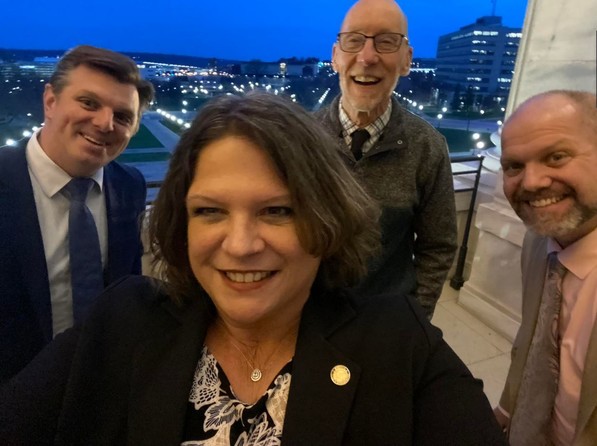
We’ve had a few late nights, and it’s been nice to have a chance for a quick break to enjoy the Loggia (which is the outdoor space above the Capitol steps). I’m reminded of our dear colleague Rep. Diane Loeffler, who passed away in 2019 after a courageous battle with cancer. During the Capitol remodel, Diane was the driving force behind opening up this space for the public to enjoy. I think of her every time I enjoy the beautiful view with my colleagues.
UI/Frontline Worker Agreement
As I mentioned last week, the House, Senate, and Governor Walz reached a bipartisan agreement to both deliver bonus checks to frontline workers and replenish the Unemployment Insurance (UI) Trust Fund. This is important compromise has been signed into law to both thank our frontline heroes – first responders, child care providers, grocery store and retail workers, and more – for their sacrifice- while helping businesses avoid a tax increase. $500 million will be available for bonus checks – about $750 each.
The state of Minnesota is currently developing an online application system. Workers can sign up to receive notifications about updates at frontlinepay.mn.gov. Workers will have 45 days to apply once the application process opens. A full FAQ document, including eligibility information, is available here.
Some businesses have already paid their first quarter taxes, and the Minnesota Department of Employment and Economic Development has indicated they will issue refunds and credits. Resources for business owners are available here.
Floor Action
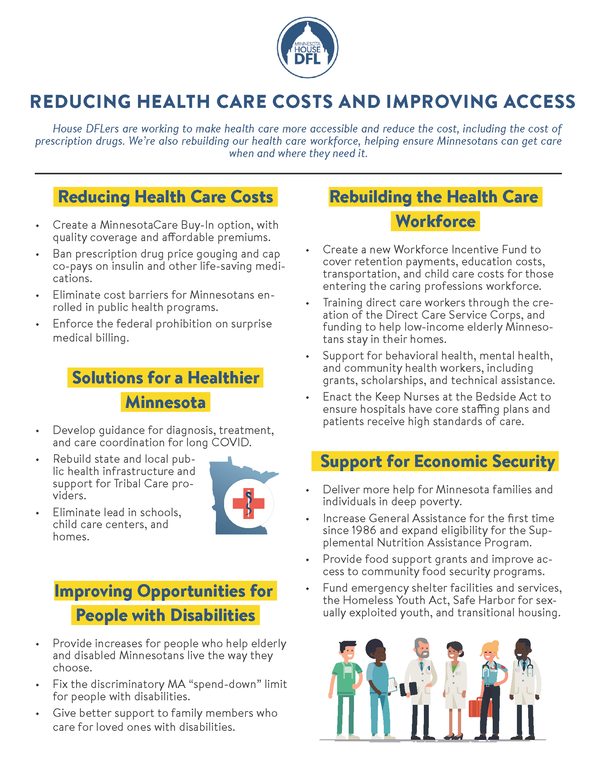
Tuesday we passed the Health and Human Services budget bill to address high health care costs, along with solutions to attract, recruit, and retain dedicated professionals in fields such as direct care, long-term care, and behavioral health. Notably, the House DFL blocked two anti-choice amendments offered by our GOP colleagues.
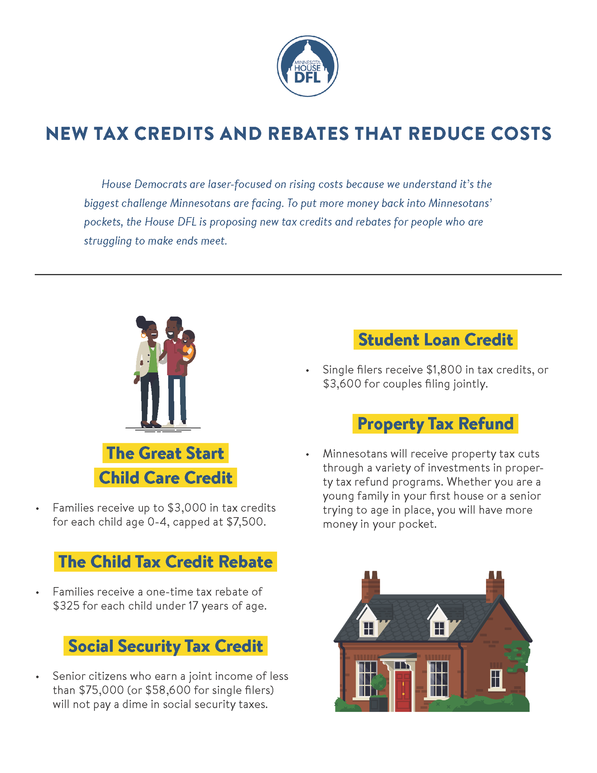
Wednesday, the House approved the Tax bill with a package of new tax credits and rebates to help Minnesotans who are struggling with rising costs. The majority of the benefits in the House DFL tax bill go to families with young children, senior citizens living on fixed incomes, and people with student loan debt.
Our bill would reduce the cost of housing by making the biggest investment in property tax refunds and renter’s credits in decades. As the Property Tax Chair, I helped craft the bill with my colleagues. The renters credit provision alone expands eligibility, makes it easier for filers to apply by moving it to the income tax forms, and gets folks their money earlier. As a result, more than 150,000 additional renters will qualify, with an average benefit of $700. Statewide, 30% of renter’s credit recipients are seniors or people with disabilities.
In addition to the renter’s credit, we make a large investment in property tax cuts through additional money in the homestead credit refund program, expansion of the homestead exclusion, and increasing the targeted property tax refund program. We also increase the increase the income level for the senior deferral program, as well as reducing the number of years you have to be in your home before you can use this valuable tool. These changes will put money back into Minnesotans’ pockets at a time when they need it the most.
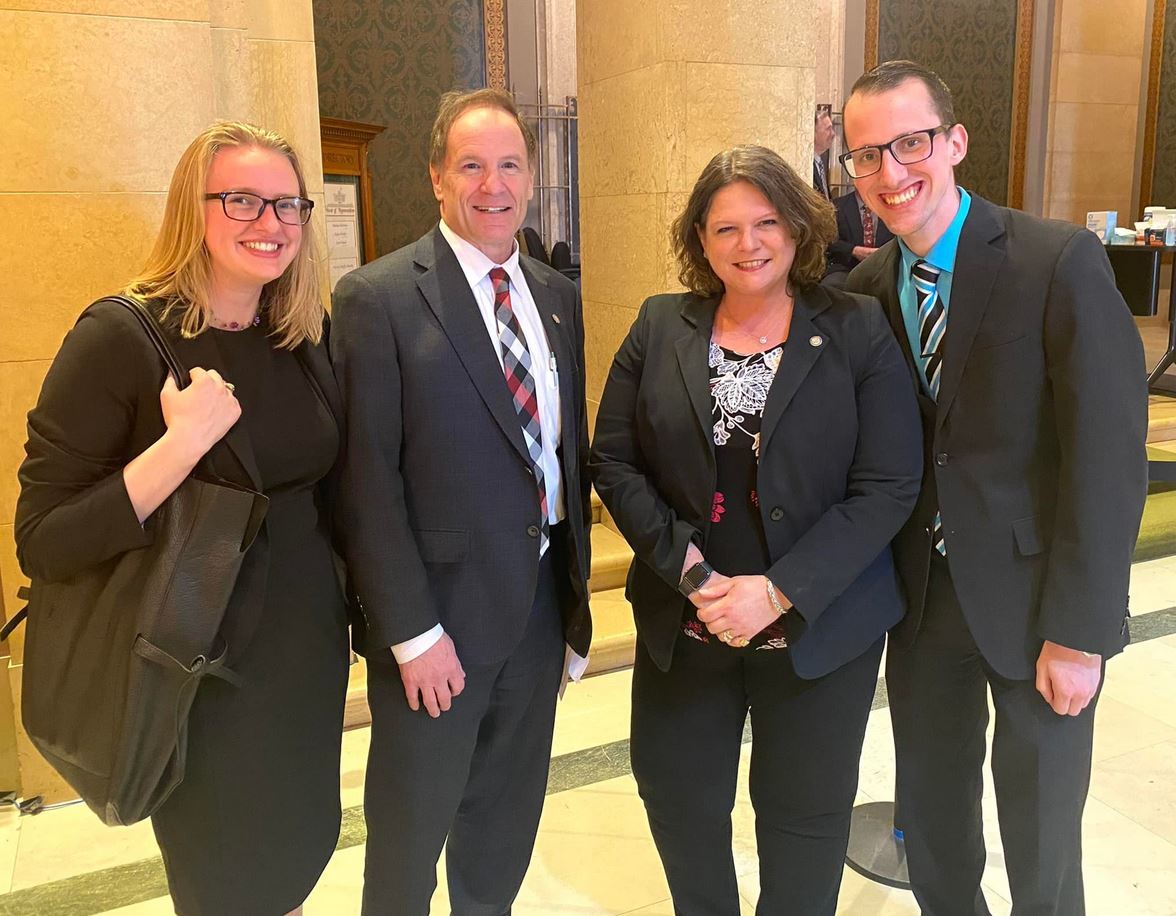
Proud House Property Tax Chair here with a debt of gratitude to this Tax team & our amazing non-partisan staff! We couldn’t do our jobs without you. Pictured here: House Tax Chair Paul Marquart, Tax & Property Tax Committee Administrator Polly Cerkvenik, & Committee Legislative Assistant Eric Petersen.
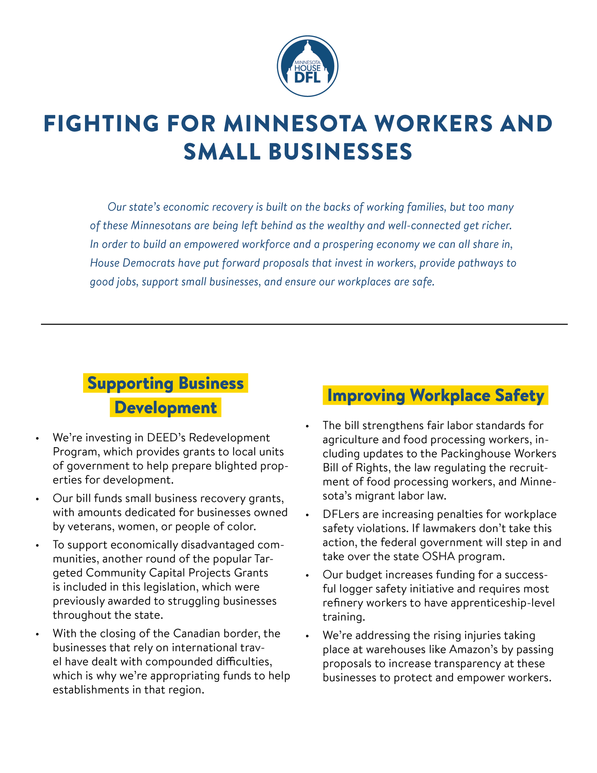
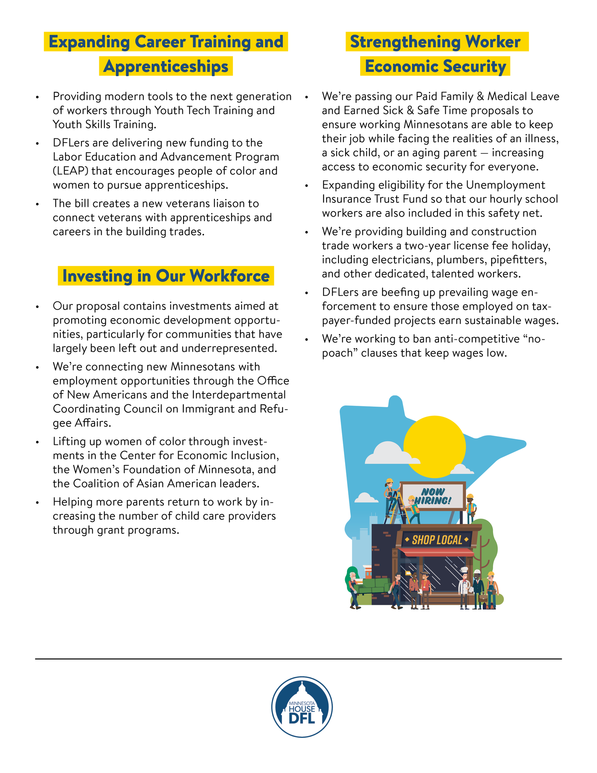
The House also passed a Workforce and Labor bill to, among other things, deliver resources to working Minnesotans, fund training and workforce development, invest in struggling small businesses and economic corridors throughout the state, and keep workers safe on the job. Included in this bill is also a provision that allows school hourly workers to qualify for unemployment benefits.
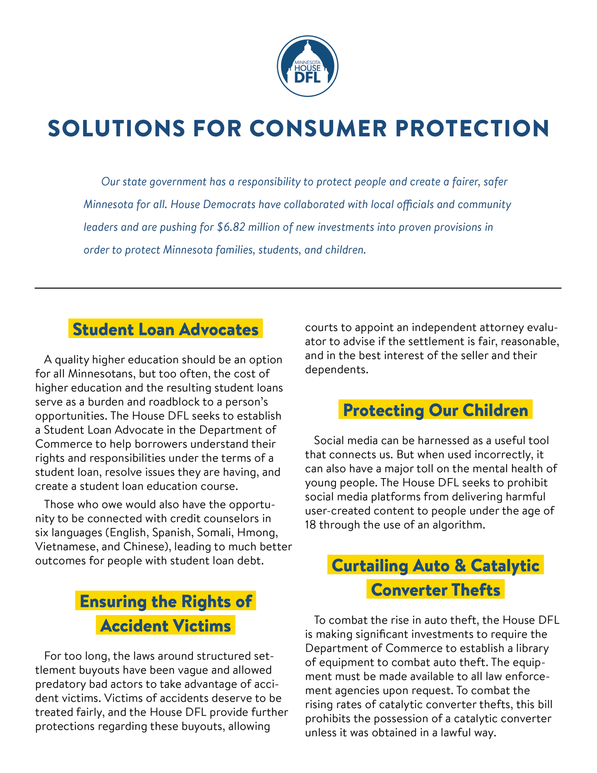
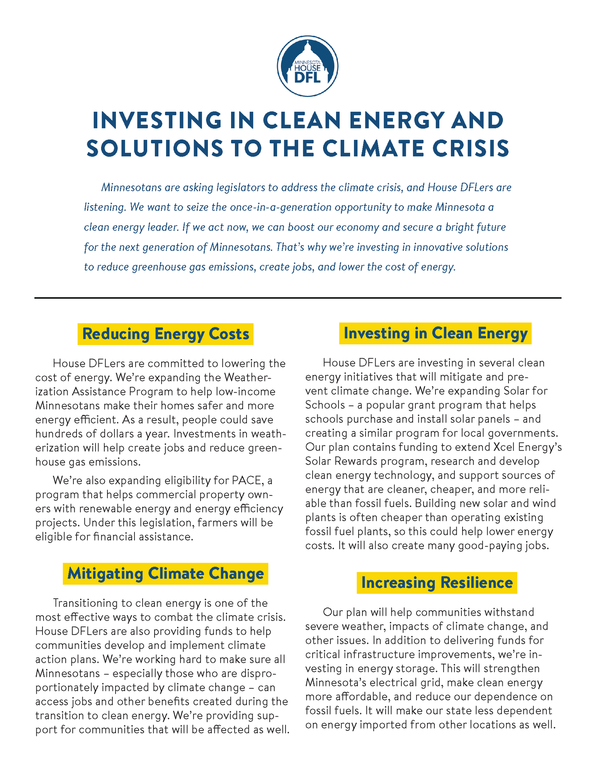
We also advanced a significant omnibus budget that invests in clean energy infrastructure, consumer protection related to catalytic converter theft and predatory student loan providers and much more.
Hometown Heroes Assistance Program
Our firefighters are a critical component to our collective public safety in Minnesota, which is why I’m so glad to see the governor sign legislation that extends the Hometown Heroes Assistance Program.
The new, bipartisan program is the most comprehensive in the nation, providing firefighters with free access to emotional trauma resources, up to $20,000 for a diagnosed critical illness, and ongoing health and wellness training that includes evidence-based suicide prevention strategies.
Our dedicated firefighters work hard every day to keep us safe and risk their own health and safety while they’re taking care of us. They deserve ongoing support and I was glad to chief-author this legislation that makes that possible.
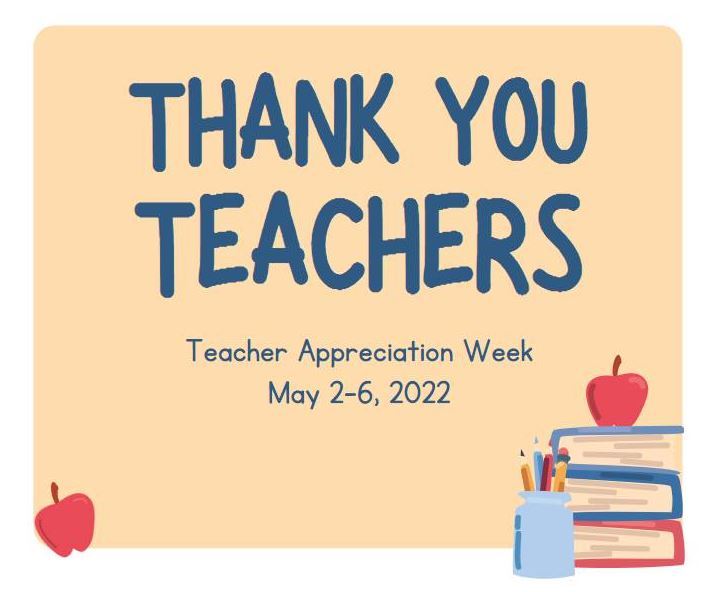
National Teachers Appreciation Week May 2-6, 2022
Every week should be teacher appreciation week! Thank you to our teachers across the state for all you do to educate our kiddos and make sure they feel valued. I’d like to give a special shout-out to the 14 teachers and former teachers in my family . I am the proud granddaughter, daughter, niece, sister-in-law, spouse, and mother of teachers.
Keep in Touch
Please continue to reach out anytime at rep.cheryl.youakim@house.mn or 651-296-9889 with questions or if you need assistance. Email is the quickest way to get in touch.
Thank you for the honor of representing our residents and families in the Minnesota House!
The “dream big” approach seems to have worked in forging a compromise tax bill.
The two tax chairs came in with one highest-priority item on each of their to-do lists, and they both made it intact into the final bill announced Saturday afternoon.
For the Senate, it was elimination of all income taxes on Social Security benefits. For the House, it was property tax relief, primarily in the form of making the renter’s credit into a refundable income tax credit.
Both provisions are in the final version of HF3669, a bill sponsored by those tax chairs, Rep. Paul Marquart (DFL-Dilworth) and Sen. Carla Nelson (R-Rochester). After they signed their conference committee’s agreement, it’s now up to the House and Senate to approve the compromise legislation, and House Speaker Melissa Hortman (DFL-Brooklyn Park) has said that it may be the last bill passed off the House Floor on Sunday night.
“We have in this bill the largest tax cuts in the history of this state,” Marquart said. “And it’s going to affect families and individuals across the state.”
“We have worked hard to come up with a great tax bill,” Nelson said. “Minnesotans all across our state are struggling with rising prices, and it is our duty to get this money back to them.”
As amended, the compromise legislation would reduce total taxes by $1.4 billion in the current biennium and $2.4 billion in the next one. Almost all of that change would be in individual income taxes.
The Senate would get what it wants in the full subtraction of 100% of Social Security benefits from income taxes. That would reduce the General Fund by $509.6 million in fiscal year 2023.
The House would get its top priority in that the renter’s credit would become a refundable income tax credit. The largest piece of property tax reform in the bill, it would reduce the General Fund by $372.6 million in fiscal year 2023.
The Senate also wanted a reduction in the first-tier tax rate, and it would get one in the compromise, in that the rate would be reduced to 5.1% from the current 5.35%, reducing state revenues by $276.7 million.
That’s significantly smaller than the reduction to 2.8% from the current rate of 5.35% in the bill that passed the Senate. The compromise on budget targets reached by Legislative leaders and the governor clearly made that outside the realm of possibility, the revenue reduction far exceeding the total agreed to for tax cuts.
Here are the other big-ticket items, along with how much they would reduce General Fund revenue in fiscal year 2023, according to Department of Revenue estimates:
an increased child and dependent care tax credit with a higher threshold for phaseout ($55.5 million);
a refundable tax credit for people whose natural gas bills soared during the February 2021 “Polar Vortex” ($14.7 million);
a higher income threshold for those eligible for the K-12 education tax credit ($13.3 million);
an extension of the small business investment — or “angel” — tax credit ($7 million);
eligibility modifications for the Beginning Farmer Tax Credit ($3.7 million);
a military pension subtraction, with expanded eligibility ($1.3 million); and
an increase in the second-tier rate of the research and development tax credit from 4% to 4.25% ($1.2 million).
According to Revenue Department estimates, the bill would also provide, in fiscal year 2023, reductions of:
$36.1 million in corporate and franchise taxes;
$15.9 million in the statewide general property tax levy;
$11.3 million in sales and use taxes; and
$1.1 million in estate taxes.
The bill also includes $44 million of increases in local government aid.
“This is going to have a real, meaningful impact on people’s lives,” Marquart said. “But nothing moves forward without the rest of the budget agreement passing. Sen. Nelson and I are both former teachers, so we’re saying to the other committees, ‘Get your homework done!’”


















Recent Comments