I sent out an update earlier this week with our community conversation dates, but I thought I would get back on track with our normal Friday updates. I also wanted to update you on the status of the Minnesota House of Representatives.
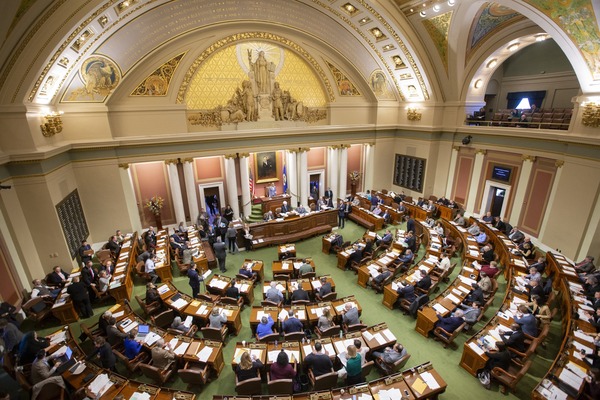
I’m sure you’ve heard about a tumultuous start to the year as the Minnesota House prepares for session to begin next week. I think it’s important to share with you the gravity of the situation and why my DFL colleagues and I are working to protect the integrity of our institution.
In November, Minnesotans voted for equal numbers of Democratic and Republican state representatives. A 67-67 tie in the 134-member Minnesota House of Representatives is extremely rare, but I see it as a golden opportunity for Democrats and Republicans to show Minnesotans that we can govern together on a bipartisan basis.
Unfortunately, my Republican colleagues have walked away from power sharing negotiations and are now attempting to leverage a two-week plurality to assert two years of control over the State House of Representatives. During a January 6 press conference, Republicans confirmed their plan to try to use a two-week, one-seat advantage to seize control of the House for the next two years, even though Minnesotans voted for equal numbers of DFL and Republican state representatives.
Republicans also made clear that they would use their temporary one-vote advantage to unseat Brad Tabke of Shakopee, a duly elected DFL state representative, and order a special election regardless of the fact that he won his election. This in effect disenfranchises the 21,980 voters who cast their ballots in the November 5 election. This has never been done in Minnesota history and sets a very problematic precedent that would create future instability for the House.
I’m calling on my Republican colleagues to honor the election results and sign a power-sharing agreement that has been negotiated for over two months. A majority in the Minnesota House requires 68 members, and Republicans have only 67 members. It takes 68 votes to pass a bill, which means we must work together for Minnesota on a bipartisan basis to get things done.
Democrats are ready to get to work. I am hopeful that a power-sharing agreement can be adopted before the new legislative session begins on January 14. At this time, my focus is on doing everything within my power to make that happen. I have no interest in denying quorum by not attending floor sessions, but we cannot allow this illegitimate power grab to occur.
In the last few months, I have been preparing to be the House Education Finance co-chair. I have been working on legislation, meeting with K-12 education stakeholders, meeting with new members of our committee, and talking with my Republican co-chair. I want to get to work with my Republican colleagues under shared power. This situation can be resolved, but first Republican leadership needs to return to the negotiating table.
Earlier this week, Rep. Juile Greene, Senator Ron Latz and I had a chance to sit down with the Edina City Council and city staff to hear about their legislative priorities. I’m excited to partner with the city on their bonding bill and other items that they are looking at pursuing.
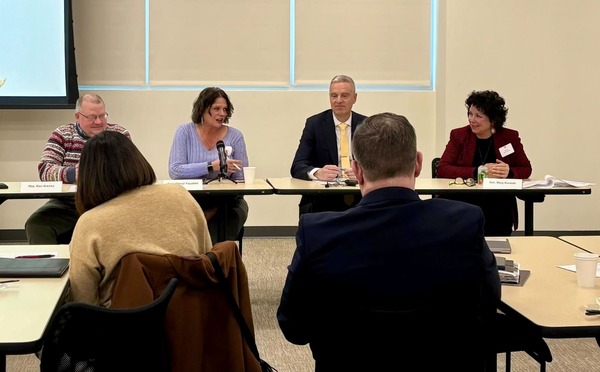
Just this morning I spoke on a legislative panel at the Association of Metropolitan School Districts breakfast. I also had the opportunity to meet with schoolboard members and the Superintendents from both St. Louis Park and Edina school districts.
Association of Metropolitan School Districts legislative panel
I also met with Edina City councilors and St. Louis Park counselors last week to discuss priorities of our community.
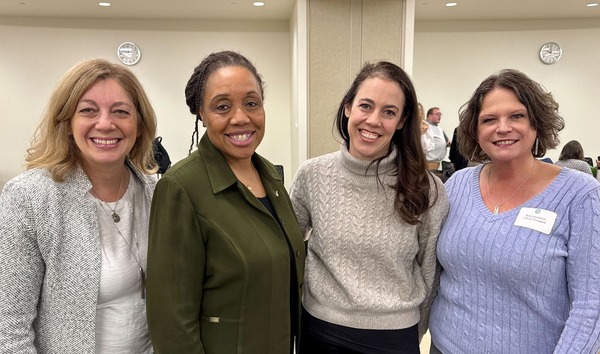
Edina Superintendent schools Dr. Stacie Stanley, school board member Cheryl Barry, and Rep. Julie Greene.
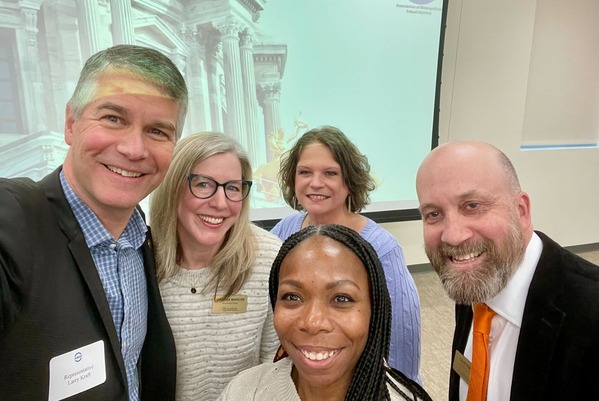
St. Louis Park schools Superintendent Dr. Carlondrea Hines, schoolboard members Virginia Mancini and Colin Cox, and Rep. Larry Kraft.
Please contact me anytime with questions, ideas, or to let me know how I can be of assistance to you. I can be reached at rep.cheryl.youakim@house.mn.gov or 651-296-9889. Thank you for the honor of working for Hopkins, Edina, and St. Louis Park at the State Capitol.
Happy New Year! The legislative session is just around the corner so mark your calendars for my upcoming Community Conversations, details are below. Hope to see you there!
Edina Library (5280 Grandview Square, Edina) Tuesday, January 28 – 6:30-8 pm Saturday, Feb. 22 – 1:30-3 pm
St. Louis Park Library (3240 Library Lane, St. Louis Park) Saturday, Jan. 25 – 11:30 am-1 pm Tuesday, Feb. 25 – 6:30-8 pm
MNSure Open Enrollment
Through January 15, Minnesotans can sign up for 2025 health insurance through MNsure, Minnesota’s health insurance marketplace. This is the annual opportunity for Minnesotans to shop, compare, and buy a private health plan. MNsure is the only place you can apply for financial help to lower the cost of your monthly insurance premium and out-of-pocket costs. Most Minnesotans who enroll through MNsure qualify for financial help. Don’t hesitate to reach out to my office at rep.cheryl.youakim@house.mn.gov with questions or if you need assistance.
Keep in Touch
Please continue to contact me anytime at the email address listed above, or by phone, at 651-296-9889. Email is the quickest way to get in touch. You’re also welcome to follow me on my Facebook page for more updates from our communities and the State Capitol.
Lastly, I’d like to thank my committee legislative assistant, Shamat Abraha, for her service to Hopkins, Edina, and St. Louis Park, as well as the Education Finance Committee as she embarks on a new journey with the House Taxes Committee. Thank you for all your work and dedication, Shamat!
I’m pleased to welcome Robin Schmidt to the team as our new committee legislative assistant. Robin will also be working with the House Education Finance team this biennium.
Stay warm this week!
Youakim signature Cheryl Youakim State Representative
I hope this email finds you well and warm and safe with the fresh blanket of snow we woke up to yesterday. A big thank you to our city and state snowplow drivers!
The new legislative biennium is just around the corner and the impact of our work from the last two years is still taking shape. During a campaign cycle, I am not allowed to contact you directly until after the November election. So I wanted to catch you up and share with you a link to the new state laws that went into effect July 1 and August 1. There are also new laws that will be going into effect on January 1. I am proud of the work we did around consumer protection, public safety, investing in our communities, and increasing the funding to our schools. There is still much work to be done, and I am looking forward to the upcoming session.
When session gets underway on January 14th, we will work in tandem under a 67-67 tie in the Minnesota House of Representatives. Speaker Hortman and Republican Leader Demuth have negotiated how the House will run in the 2025 session, and agreed to an overall committee structure. The membership of committees will be equally divided and represented by DFL and Republican co-chairs. I’m excited to continue as a co-chair of the House Education Finance Committee, in addition to serving on my other assignments which include the Taxes and Ways and Means committees. You can find the 2025-2026 House membership here as well as the new committee structure and membership here.
I’m organizing my community coffee hour schedule for January and February; please stay tuned on those details! I appreciate these opportunities to connect with constituents and hear from them in person in the district. As always, I make sure to provide locations in each of our cities: Hopkins, Edina, and St. Louis Park.
Wishing you and yours a peaceful holiday season. However you celebrate, I hope you have a chance to enjoy this time with loved ones.
Happy Holidays!
Youakim Signature Cheryl Youakim State Representative
During the interim, I like to take time for more extensive visits with our community leaders. This week I had the opportunity to sit down with St. Louis Park Police Chief Bryan Kruelle and Edina Police Chief Todd Milburn. It is important to me to keep those open lines of communication all year, spending more extensive time to hear what initiatives our cities and school districts are working on and cultivating our partnerships to enhance our communities’ quality of living. I also had the chance to sit down with Paul Meunier and Gaonu Yang from Youth Intervention Programs Association (YIPA). YIPA is a collective of non-profits that have united around the goal of getting our young people on a path to success through a variety of different approaches. You can check out the work that YIPA does here.
When our kids return from summer vacation and head back to school in the fall, there will be a handful of new laws in effect to focus more resources on student success, notably when it comes to reading comprehension and literacy. As I continue my “deep dive” overview of our progress at the legislature, it’s appropriate to focus on education with fall just around the corner.
K-12 Education Investments
In 2023, we enacted the Reading to Ensure Academic Development (READ) Act, accompanied by $92 million in funding toward this groundbreaking student literacy initiative. On July 1, 2024 many of the provisions of the Minnesota Reading to Ensure Academic Development (READ) Act went into full effect. This year we built on that investment with an additional $37.22 million to ensure that all of Minnesota’s students are reading at grade level beginning in kindergarten. The READ Act includes resources for training teachers, purchasing curriculum, and much more. In addition to improving literacy, here are some of the other significant new laws we passed this biennium including:
Increase funding for full-service community schools, special education, and English language learners
Funding to increase school nurses, counselors, psychologists, and social workers
Funding to increase teacher recruitment and retention as well as a pilot program to pay a stipend to our student teachers for the 3 months they are honing their skills in our classrooms
Free breakfast and lunch for students and expanded summer nutrition resources
Annual reviews and revisions of personal learning plans to ensure students are on track to graduate
Allowing school districts to grant parental access to their student’s performance data
A bill I authored enhancing the right to free speech for student journalists and freedom of the press in school-sponsored media
Adding Native cultural practice, observance, or ceremonies to the list of excused religious absences from school
Requiring schools to have a language access plan for students and families who speak languages other than English
Ensuring certain rights and protections for children of Minnesota Army National Guard and Air National Guard members when transferring between public schools
All of this progress is built on the historic investments we delivered in 2023 in Minnesota’s education system, including more than $6 billion over the next four years in our schools. From providing free school meals to all students regardless of income to linking the general education formula to inflation, this legislature has ensured that the needs of students will always come first.
Early Care and Family Supports
Outside of our K-12 schools, we made investments to support children at all stages of development, from ensuring access to food at home to supporting caregivers. Some of these investments delivered:
$2 million for the Minnesota food shelf program
$2.39 million for Minnesota’s regional food banks for purposes of the emergency food assistance program
$1 million for the American Indian food sovereignty funding program
$9.66 million for information technology improvements to the outdated Social Services Information System used by more than 6,000 workers around the state to track and manage child welfare casework
$1.13 million for the childcare improvement grant program
$3.39 million for emergency services grants
$550,000 for the Supporting Relative Caregiver Grants Program
Higher Education Investments
Our team is recommitting to and making significant investments in higher education. The House and Senate worked together to craft a transformative budget in 2023 to help students as well as the systems including:
Fully funding a tuition freeze at Minnesota State for two years, saving students a combined $75 million.
Providing $50 million in one-time funding to address structural deficits across the entire MinnState system, saving jobs and programs.
Providing the University of Minnesota with an additional $100 million over the biennium.
Fully funding the University of Minnesota’s Systemwide Safety and Security request for $10 million in FY 24-25 and providing an additional $2 million ongoing.
Providing an ongoing $1 million per year to each of the three Tribal colleges.
North Star Promise Full Scholarships
A key initiative we got across the finish line called the North Star Promise will provide full scholarships to eligible students to attend a public postsecondary education or Tribal college in Minnesota. To qualify for the scholarship, students must complete the FAFSA or the state aid application, have an adjusted gross household income below $80,000, be enrolled in at least one credit, and meet satisfactory academic progress. Scholarships are for one semester and can be renewed up to 60 credits for a certificate or associate degree and 120 credits for a bachelor’s degree. The program will start for this 24-25 school year and you can learn more about applying here.
Last Update
Whether seeking reelection or not, legislators cannot send certain unsolicited communication during an election period which starts 60 days after we adjourned this year’s legislative session. Therefore, this will be my last legislative update until after November 5. I still encourage you to contact me if I can ever be of assistance with a state-level issue or if you’d like to share your input with me at rep.cheryl.youakim@house.mn.gov or 651-296-9889. Please note my new office address is: 5th Floor, Centennial Office Building, St. Paul, MN 55155.
I hope that everyone is weathering the heat and the scattered storms in Minnesota this week. I have been at an Education Commission of the States event this week in D.C. The weather here has ben hot and muggy, but the education and networking experience has been worth it. Senator Kunesh and I joined Education Commissioner Willie Jett, Reagan Greene from the Governor’s office, and others from Minnesota to hear about trends in Education Finance, dealing with absenteeism rates, approaches to teaching English Language Learning, and much more.
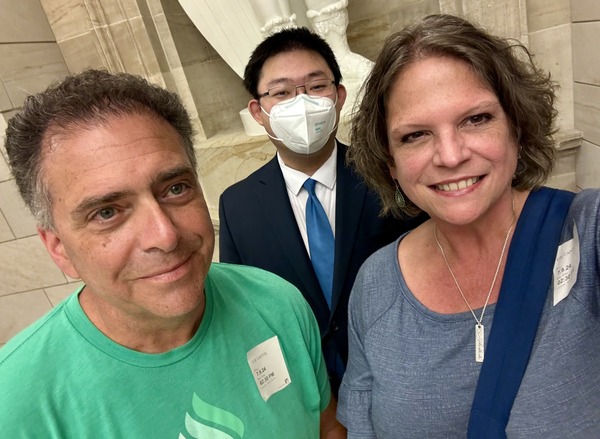
My husband and I had a chance to head out to D.C. a few days earlier to visit the amazing Smithsonian Museums, the inspiring monuments, and to tour the beautiful U.S. Capitol building. Thank you to Charles Huang from Senator Tina Smith’s office for the informative tour! If you have a chance to visit Washington D.C., you can contact any of our Congressional members or US Senators for a Capitol tour.
As I mentioned previously, I’m continuing to provide “deep dive” email updates to summarize our work in various areas of the state budget. This week’s newsletter contains more information about our collective work in Agriculture, Commerce, Transportation, and Environment and Energy.
Agriculture
Minnesota’s vast farmlands and agricultural production are a cornerstone of the state’s economy and a source of pride for our residents. We came away from this legislative session with solutions to address challenges and initiatives aimed at ensuring clean water for future Minnesotans while increasing statewide equity in agriculture. Our investments in Minnesotans who go to bed hungry reflect our commitment that everyone should have access to fresh, nutritious food.
With much of our landscaping workforce primarily being Spanish-speaking Minnesotans, we helped individuals who have been unable to receive commercial pesticide applicator licenses, not due to a gap in skills, but strictly due to the unavailability of a Spanish version of the exam. This year, we made a change that removes a major barrier that artificially prevents Spanish speakers from higher wages in their current jobs and from obtaining the qualifications needed to start businesses of their own.
We also expanded eligibility for the popular Farm to School program, which currently provides a guaranteed produce buyer for farmers while ensuring our children are provided with healthy school meals, to childcare centers and home-based childcare providers.
Transportation
The 2023 transportation budget package was transformative with the DFL delivering desperately needed sustainable revenue for our underfunded multimodal transportation system and enacting important safety and equity measures that had been previously blocked under GOP Senate control under a divided legislature.
We helped usher the incoming federal funds from the Infrastructure Investment and Jobs Act (IIJA) that passed with broad bipartisan congressional support in 2021. Along with matching funds for federal grants which will allow us to continue building out a strong infrastructure system, we took important steps forward to advance climate mitigation measures not only to protect our air quality and our environment, but to also provide consumers with more electrification choices.
As a result of our work in 2023, we are addressing growing safety concerns on the Metro Transit system by providing more eyes and ears on the trains to conduct fare enforcement (while bringing violations into line with parking tickets), and working with social services providers to connect riders with the housing/addiction/mental health services they need.
We also finally restored the right for all Minnesotans, regardless of immigration status to obtain a state driver’s license or ID. Despite the negative rhetoric around federal immigration policy, this state law will help ensure safe roads, family stability, and greater economic opportunity by requiring all applicants to learn and know the rules of the road. In fact, recent data has shown a large number of Minnesotans are taking the test.
Environment, Climate, and Energy
We are also focused on protecting and preserving our environment so our kids and grandkids can enjoy the same beautiful Minnesota landscape we do. Notably, we invested $79.64 million of revenue from the Minnesota Lottery in more than 100 projects as recommended by the Legislative-Citizen Commission on Minnesota Resources to protect, conserve, preserve, and enhance Minnesota’s air, water, land, fish, wildlife, and other natural resources. Other new laws protecting our climate and environment include:
$20.3 million for land acquisition and recreation projects, including more than $5 million to develop state trails and $4.7 million for local parks, trails and natural areas
$11.3 million for 22 environmental education projects such as $410,000 to support a naturalist and intern at a nature center in Austin and $459,000 to create a mobile earth science education lab in northwest Minnesota
$6.9 million directed toward water resources research projects such as state flood and drought modeling and nutrient recovery from wastewater treatment plants research
$4.83 million for five projects addressing air quality, climate change and renewable energy, such as one to develop and test low-cost biofilters
Minnesota continues to be one of the fastest-warming states in the country and is already experiencing climate change impacts. Federal and state lawmakers are taking bold and transformative action to address the climate crisis making the 2023 legislative session the most impactful year for climate and energy policy in state history. Over the biennium, DFLers enacted 100% Carbon-Free Electricity standards by 2040, created a State Competitiveness Fund to put Minnesota in the best position for federal energy grants, and provided local matching funds for the IIJA or IRA for energy projects, and provided technical assistance for smaller entities (cities, electric co-ops, tribes, others) so to apply for grant programs and take advantage of these federal dollars.
This year, we passed a permitting reform package that will speed up our clean energy transition that had the support of environmental organizations and labor unions. Minnesota is leading the clean energy transformation to create jobs, strengthen our economy and community, and protect and preserve our environment.
Commerce
We made strong consumer protections that will last generations. To protect the pocketbooks of Minnesotans, DFLers are capping fees on payday lenders and creating an official advocate for students taking out student loans. We are also taking on the high costs of prescription drugs by creating a drug price affordability board, prohibiting generic drug price gouging, and capping co-pays on drugs and supplies for chronic disease such as asthma, diabetes, and epi-pens.
Share your Input on Prescription Drug Pricing
DFLers are interested in hearing from Minnesotans about how prescription drug prices impact their health care, what affordability concerns exist, and which drugs might benefit from pricing transparency. If you are interested in providing your insights, you can complete the Public Input on Prescription Drug Price Transparency in Minnesota form to share your experiences and help guide the Minnesota Department of Health’s ongoing drug price transparency work.
Keep in Touch
Please continue to reach out anytime at rep.cheryl.youakim@house.mn.gov or 651-296-9889 with input or questions. I appreciate hearing from you! Thank you for the honor of representing our Hopkins, St. Louis Park, and Edina neighbors at the Capitol.











Recent Comments