I hope this email finds you well and you have been able to enjoy some of summer in between the rain showers. My thoughts have been with our Minnesota neighbors who have been experiencing flooding. There have been 22 counties that have been approved for federal disaster relief dollars to help with clean-up. If you have friends and family in these areas, they can find information here.
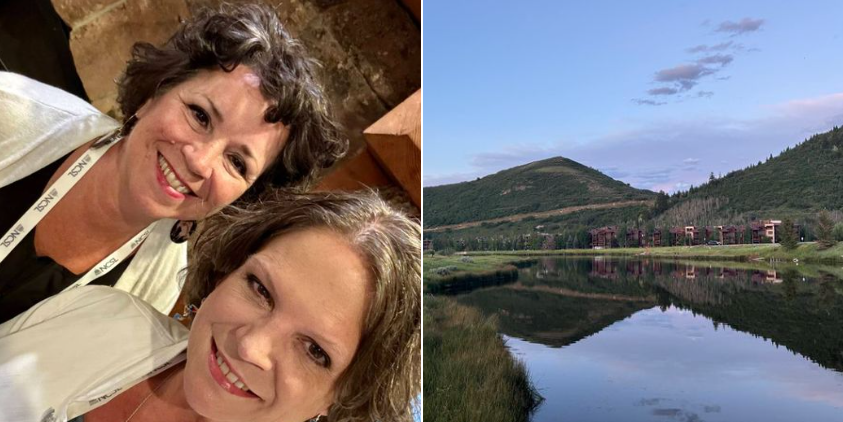
Last week I spent five days at three back-to-back conferences focused on education hosted by the National Council of State Legislators. It is always helpful to hear investment approaches to education funding and policy from legislative colleagues around the country. There were sessions on literacy, absenteeism, artificial intelligence, funding formulas, and more. It was very informative! And while they kept us busy from 7:30 am to 8:30 pm in meetings, I was to enjoy a bit of Park City, Utah’s beautiful views in the evening. Senator Mary Kunesh, Chair of Senate Education Finance Committee, joined me for part of the conference as well.
As we celebrate July 4th, we reflect on Americans’ ability to enjoy their life with dignity, liberty, and the pursuit of happiness. I would like to lay out how some of these fundamentals are reflected in the work we’ve delivered to Minnesotans in the areas of health and human services, veterans affairs, and state and local government.
Health and Human Services
In 2024, DFLers in the legislature took meaningful action to enhance health insurance coverage, improve health care access, and help address mental health in Minnesota. Legislators did this work in ways that consistently put patients first and protect the public interest. Everyone in the wealthiest country in the world, regardless of age, sex, gender, race, creed, or zip code, deserves access to affordable, quality, health care. That’s why we are now expanding insurance coverage to include reproductive care, wigs for cancer patients, prosthetics, and gender-affirming care. As other states become more hostile to LGBTQ+ people, we banned “conversion therapy” and made Minnesota a place where people can live their true selves. We also delivered new investments in services for people with disabilities, and other vulnerable Minnesotans.
DFLers are addressing health staffing shortages without compromising patient safety and making it easier for people to get support by reducing unnecessary paperwork. In 2023, legislators achieved a bipartisan agreement delivering an additional $300 million to nursing homes over the next four years. We’re also requiring that nursing homes must disclose costs associated with leases, rent, and use of land or other real property, along with who owns the property they are leasing to increase transparency. One key measure we got across the finish line for our seniors this year includes enhancing counseling and planning services for seniors and their families who are considering moving into long-term care facilities.
Mental health care is health care. Many of our loved ones struggling with their emotional wellbeing, addiction, and more. To address these needs, we worked together to quickly went to increase access to mental health services, substance use disorder treatment, develop a covered benefit under MA to provide residential mental health crisis stabilization for children, more investments in respite care services, and school-linked behavioral health grants.
After the Dobbs court decision and the overturning of Roe. V. Wade, we quickly went to work in early 2023 establishing landmark reproductive freedoms. The first state bill in the entire country to protect these rights was in Minnesota, by passage of the Protect Reproductive Options (PRO) Act. The PRO Act specifies that every individual has a fundamental right to make autonomous decisions about the individual’s own reproductive health, including the fundamental right to use or refuse reproductive health care.
Veterans and State and Local Government Affairs
Our democrat majority is reversing decades-long spending cuts in our constitutional offices, our legislature, and across our state government agencies. We also invested in a more robust state grants management system to safeguard our taxpayer dollars while still providing needed support for programs in our communities that reach Minnesotan’s most in need.
Together we passed meaningful policy changes across our state and local government. We’re making sure elections are free and fair financed and decided by Minnesotans- not corporate special interests. We also are addressing problems caused by pension disinvestment and the growing crisis of PTSD-related duty disability claims affecting our first responders.
The DFL prioritized a portion of the surplus in our state budget of 2023, fully funding Veterans and Military Affairs, as well as providing funding to tackle veterans’ homelessness and expanding the post-9/11 veterans’ service bonuses.
New Laws Take Effect July 1
Our supplemental budget, which reflects many of the initiatives I mentioned above, took effect into law on July 1st. Summaries of all laws passed by the 2024 Legislature are available online from nonpartisan House Public Information Services at www.house.mn.gov/newlaws/#/search/2024.
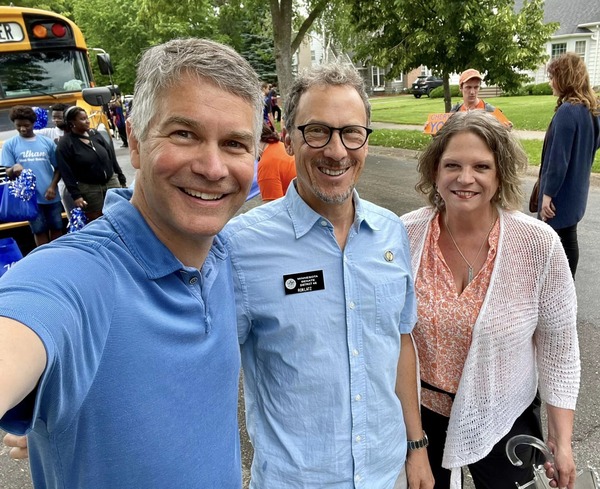
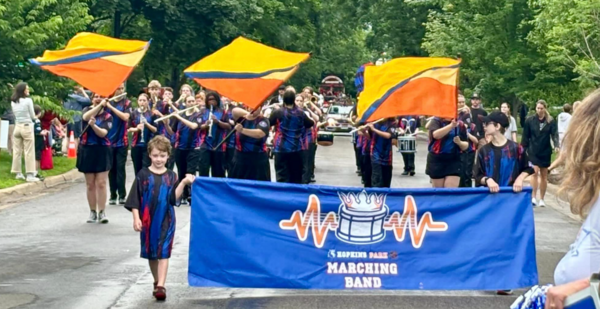
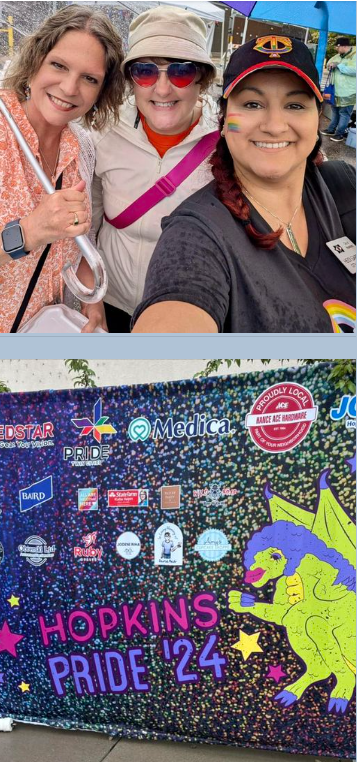
I hope this email finds you well and staying dry! While the rain was much needed, I’m hoping for sunnier days ahead. The weather didn’t dampen spirits in St. Louis Park or Hopkins last Saturday. I started out the morning marching in the Parktacular Parade in St. Louis Park. Despite the drizzly weather, the parade route still had families and residents excited to see the floats and marching bands. Then it was on to Hopkins’ 2nd annual Pride Festival with of unique vendors, live music, and support for the LGBTQ+ community.
Over the next month, I would like to highlight some of the new measures DFLers passed into law under the highly productive 2023-2024 biennium. This week’s edition will start with how we’re putting Minnesota values into action by building an economy that works better for everyone including in the areas of housing, taxes, labor and workforce.
Housing
The historic $1 billion investment across the entire housing continuum we delivered in 2023 is the largest appropriation for housing in the state’s history. With this investment, we are creating homeownership opportunities for more Minnesotans, helping struggling renters, building more homes, preserving and rehabilitating affordable housing, and creating ongoing stable housing support. Of the new initiatives I’m especially glad we got the $50 million in housing infrastructure bonds across the finish line, which will allow for the construction and rehabilitation of permanent supportive housing, preserve federally assisted rental housing, create affordable senior housing, develop single-family homes, build deeply affordable rental housing, and improve manufactured home infrastructure.
This year, we established a plan to use most of the $10 million supplemental committee budget target to primarily address emergency rental assistance. This funding will make a major difference in the lives of so many Minnesotans who are cost-burdened and at risk of homelessness. We lived up to the “a little goes a long way” approach of using smaller amounts of money to better set us up for progress and success in 2025. And we took important steps to address the power imbalance between landlords and tenants that can have significant impacts on our most vulnerable Minnesotans.
Tax Savings
In 2023, the DFL delivered tax cuts to our Minnesota families and small businesses. You may recall we started at a sprint in January of last year with the passage of a critical federal tax conformity package that included $100 million in cuts for businesses and ensured that federal student loan forgiveness would be exempt from Minnesota taxation. We also passed critical provisions which will benefit Minnesotans in every corner of the state for years to come – investments that will make good on the efforts to make Minnesota the best state in the nation to raise a family and retire.
One of the most significant of these is the Child Tax Credit, which impacted nearly 400,000 children across the state with families receiving an average credit of $2,508. We also cut the tax on Social Security for 75% of Minnesota seniors and combined the renter’s credit on income taxes simplifying the process with 310,000 filers receiving an increased credit. For Minnesota homeowners who saw huge spikes in their property tax bills, we delivered a special targeted property tax refund payment which has impacted about 164,000 filers.
This year, we also built on this historic progress by including taxpayer assistance and outreach grants to further help Minnesotans adjust to the new updates to our tax laws that took effect in 2023.
Paid Family and Medical Leave & Earned Sick and Safe Time
PFML During the 2023 legislative session, DFLers passed into law a new Paid Family & Medical Leave (PFML) program in Minnesota, which authorizes workers to take up to 12 weeks of paid leave to bond with a newborn child, for the worker’s own serious health condition, or the serious health condition of a family member. The new law, which takes effect on January 1, 2026, establishes eligibility requirements, an application process, benefit amounts, premiums paid by employers and employees, and an opportunity for employers to opt out with their own private plan.
The new PFML law also includes significant detail on the different types of leave, exclusions for independent contractors and seasonal employees, maximum weeks of leave in a year, lower premiums for small employers, and a formula for future premium rates based on benefits paid out. Six or seven years of working with advocates, stakeholders, employer groups, DEED, and others meant that hundreds of details on PFML had been vetted and resolved, resulting in a great program that will help all Minnesotans facing life’s unexpected challenges.
ESST Over 900,000 Minnesota workers – a third of the state’s workforce – lack access to any paid time off when they or a family member are ill or need to see a doctor. To remedy that, last year we enacted a statewide Earned Sick and Safe Time (ESST) policy to attend to worker’s physical and mental health needs, including illness, injury or doctor’s appointment, to attend to the physical and mental health needs of a family member (including illness, injury or appointment), absence due to domestic abuse, sexual assault or stalking of the worker or a family member, or if the worker’s job site is closed because of weather or a public emergency, or if a family member’s school is closed.
When I worked serving tables at one of our local restaurants to help make ends meet when our children were young, having paid sick leave would have been helpful. I faced the difficult decision that many hourly workers struggle with, going in to work sick or staying at home, because missed work hours mean missing out on pay.
All hardworking Minnesotans deserve the time off to care for themselves or a family member without having to forgo pay. We all do better when we’re better, and our health is cornerstone to that value we all share. I’m glad we got this done after decades of advocacy laying the groundwork for this moment.
Keep in Touch
I’ll continue with more detailed updates through July. Please continue to reach out anytime with your thoughts or questions at rep.cheryl.youakim@house.mn.gov or 651-296-9889. Although the legislative session has concluded, the work continues year round.
Thank you for the honor of representing our Hopkins, St. Louis Park, and Edina neighbors in St. Paul.
We’re in the final hours of the 2024 legislative session, as our state constitution requires us to complete our work on Sunday, May 19th at midnight. As I write this update, we’re debating adoption of a gun violence prevention measure that holds straw purchasers accountable for illegal transactions and bans binary triggers. Earlier today, we started our debate on the ERA bill. After four hours of discussion on amendments, we tabled the bill to bring up conference committee reports. It is my hope we will be returning to the ERA discussion later this evening or early Saturday morning.
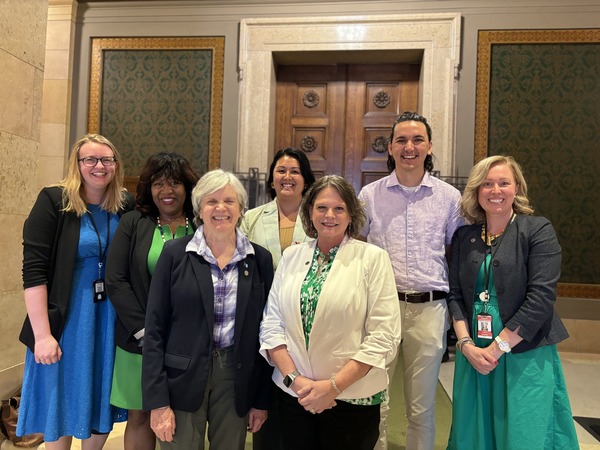
Honored to do this work with such dedicated colleagues and staff servingon the Education Committees!
The House retained all but one of our finance and policy provisions and adopted some Senate provisions that made the bill stronger. We had a fantastic Education Finance team that produced a bill built on the investments we made last year. A few my favorite highlights in the bill are:
$32+ million new money invested in the Read Act to pay for teacher’s time when they are getting training. Our local school districts will receive: $251,591 (Hopkins), $310,441 (Edina), and $156,753 (St. Louis Park).
$35 million in direct appropriations to our schools in literacy aid to implement the Read Act. These were funds appropriated last year that school’s would have had to apply for in December. Now they are going directly to schools this July with $278,661 to Hopkins, $343,843 to Edina, and $173,619 to St. Louis Park.
A student teacher stipend pilot project that will pay student teachers placed in our public schools during the 2024-2025 schools year. Students from our teacher prep programs at the U of M (Duluth, Crookston, and Fond Du Lac), State Colleges and Universities (Minnesota State Mankato, Bemidji, St. Cloud, and Winona), and at Augsburg College will receive just shy of $7,000 during their student teaching placement.
A robust absenteeism pilot project in 12 school districts across the state to innovate and collaborate on ways to keep our students engaged and in our classrooms. The school districts will receive funding to be part of these demonstration zones in Minneapolis, Columbia Heights, Burnsville, Northfield, Rochester, Mankato, Windom, Red Lake, Moorehead, Sauk Rapids-Rice, Cook County, and Chisholm.
Funds for the Minnesota Youth Council and YMCA’s Youth in Government to bring more student voices to the Capitol.
During the conference committee process, we combined the Children and Families Supplemental budget into our Education Finance Conference Committee Report. Chair Dave Pinto and I came into the Minnesota House together after the 2014 election. We both had a passion for funding early childhood and our K-12 school system. It was very exciting to be able to work together on a bill that focuses on our youngest learners and those heading into the world after high school.
Here’s a look at additional legislation and conference committee reports recently passed:
The Commerce Policy conference committee report, which provides funding to support the enactment of the Minnesota Consumer Data Privacy Act (MCDPA), adjusts two industry assessments at the Dept. of Commerce, provides major change shifts where cannabis programs are housed, cancels unused grants, and more.
The Environment and Natural Resources conference committee report, which includes significant investments in tree planting and addressing Emerald Ash Borer, a public water inventory update, policies strengthening and enforcing Minnesota’s air quality statutes, a regulatory framework for helium gas production, and nation-leading extended producer responsibility legislation for packaging recycling.
The Human Service Policy conference committee report, which continued the work of historic investments to help our most vulnerable. This bipartisan legislation clarifies several items in last year’s bill, which makes improvements for Minnesotans with disabilities, those in recovery from substance use disorder, and recipients who rely on waiver services.
The Health Supplemental Budget and Policy budget bill. This strong bill takes meaningful action to enhance health insurance coverage, improve health care access, increase patient protections, reform Emergency Medical Services, and help address mental health in Minnesota.
The Elections Committee Policy and Finance conference committee report. The policy provisions of the report focus on improved voter access and election transparency. It targets policy areas where the state can improve voter turnout and ensure that if voting is restricted, voters have a means of redress. It enhances disclosure requirements for those seeking to influence elections, expands voter access and comprehension, and increases election transparency.
The Higher Education Supplemental conference committee report. The legislation adds to last year’s record funding increase for Minnesota’s colleges and universities that froze tuition at Minnesota State for two years, fully funded the University of Minnesota’s systemwide safety and security request and provided free college to students with a household income under $80,000, among other investments.
The Agriculture Supplemental budget, which includes the reauthorization of the Food Safety and Defense Task Force, farm-to-school grant funding, creates the first Spanish language commercial pesticide applicator exam., addresses the groundwater nitrate crisis, and more.
The Climate and Energy Budget and Policy bill, which includes reforms to the permitting process for clean energy projects, support for geothermal energy power, and additional investments and policies to ensure we reach the 100% Clean Energy by 2040 goal the Legislature set last year.
The conference committee report cracking down on hidden, deceptive fees to ensure consumers have fair, upfront pricing for event tickets, restaurant meals, hotels, credit cards, and more.
New State Flag Raised
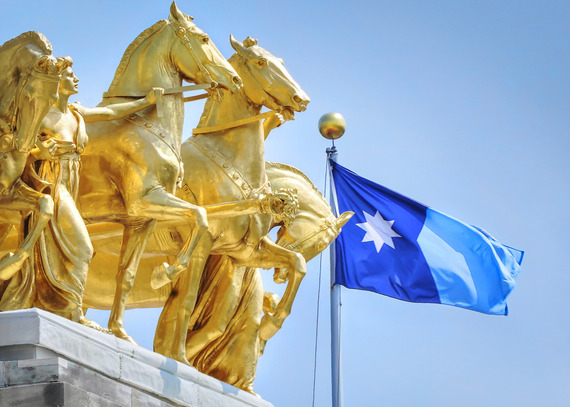
On Minnesota’s 166th birthday, Saturday, May 11, 2024, the new Minnesota State Flag was flown over the Capitol for the first time!
Photo courtesy of House Photography
Connected to Community
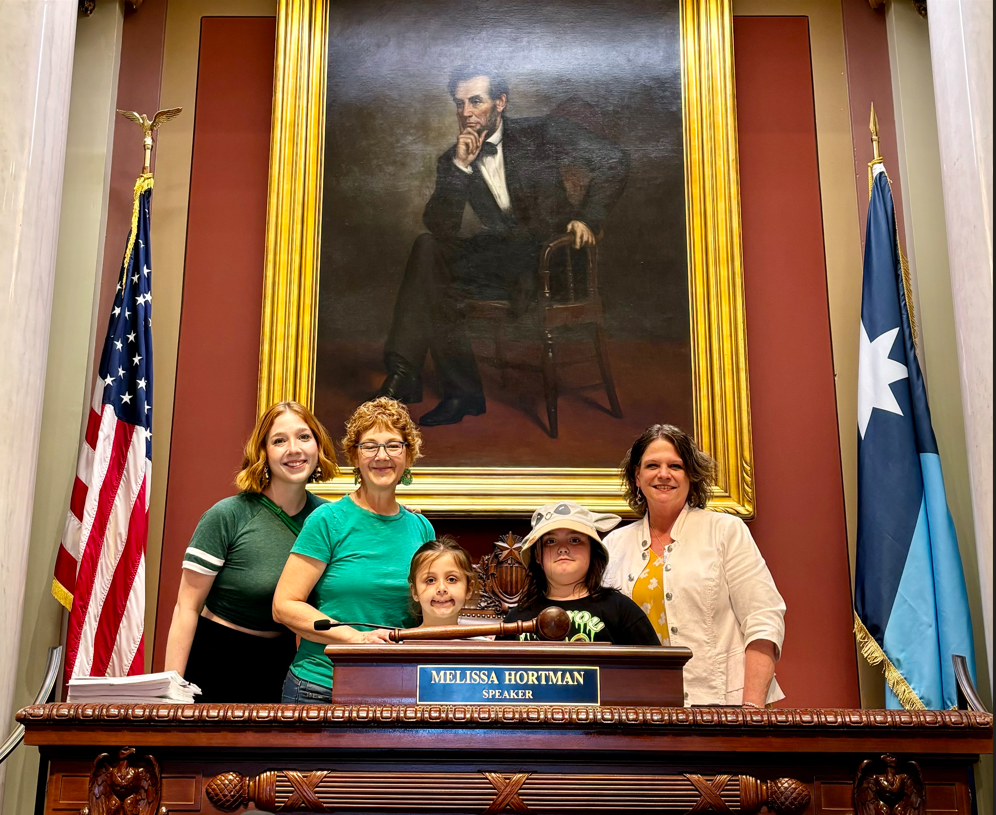
It was wonderful to welcome and give a behind-the-scenes tour for Juli Rasmussen, her two grandchildren, and her daughter of the State Capitol this week. It’s always rewarding to have a chance to visit with folks from our area in the House Chamber- especially during these chaotic, unpredictable schedules in the final days of session.
Keep in Touch
Please continue to contact me with questions, input, or ideas at rep.cheryl.youakim@house.mn.gov or 651-296-9889. With the fluid nature of the end of session, email is the quickest way to get in touch.
SAINT PAUL, Minn. – This evening, the Minnesota House passed the conference committee report on HF 5237, the Education Supplemental Budget bill. The report also includes the Children and Families Supplemental Budget bill – originally passed on its own – following a compromise with the Senate. The report passed on a vote of 70-58.
The Education Finance Budget portion of the report, authored by Rep. Cheryl Youakim (DFL – Hopkins), retains most of the budget proposal originally passed by the House, building on the Legislature’s investments last year by increasing funds for the READ Act, expanding Pre-K opportunities, providing paid student teaching experiences, addressing absenteeism, and establishing physical and mental health standards in Minnesota schools.
“Minnesotans deserve the resources to meet their students’ unique needs,” said Rep. Cheryl Youakim (DFL-Hopkins), chair of the House Education Finance Committee. “That’s why we are continuing our commitment to deliver world-class public schools for every community in every corner of the state.”
The Education Finance provisions in this conference committee report add new READ Act funding and provide districts with increased flexibility in using last year’s appropriations. It expands Voluntary Pre-Kindergarten programs by 5,200 seats beginning in 2025 and establishes working groups to ensure that English learner funds are being used in alignment with best practices and that teachers and paraprofessionals have comparable rates of pay to other jobs with similar requirements.
The conference committee report includes multiple provisions to ensure teachers and paraprofessionals have the training they need to meet student needs, including a pilot program to pay student teachers. It also includes multiple provisions to address the growing rate of student absenteeism. Finally, the bill ensures students have access to the same baseline information about their physical and mental health through state standards so they can adopt and maintain healthy behaviors throughout life.
The Children & Families portion of the report, authored by Rep. Dave Pinto (DFL – St. Paul), also retains virtually all of the budget proposal originally passed by the House. It advances needed child-protection reforms; funds food bank, food shelves, and emergency shelter; strengthens child care and early learning; and furthers the ongoing transition to the new Department of Children, Youth, and Families.
“Every Minnesota child deserves a great start, and every family deserves the support needed to make that happen,” said Rep. Dave Pinto (DFL-St. Paul), chair of the House Children and Families Committee. “This conference committee report delivers on our shared values of investing in children and families so that all Minnesotans can thrive.”
The Conference Committee Report now goes to Governor Walz for signature.
I hope folks have been able to enjoy our Spring weather! While it has been a busy week at the Capitol, it did not escape my notice that it was National Teachers Appreciation Week. Thank you to all of our teachers out there who do so very much for our students each and every day! A special shoutout to the teachers in my family: Jacques, Gannon, Danielle, Theresa, Leila, Shannon, and Kayli.
We’re in the final days of the legislative session, with our work required to be done by midnight on May 19.
The bulk of our time this week was spent on the House Floor, debating and passing our proposals for new policies and supplemental budgets. Much of this work is building off our efforts from last year, ensuring our investments have the greatest impact possible for Minnesotans.
With May underway, I’d like to wish everyone a Happy Asian American, Native Hawaiian, and Pacific Islander Heritage Month! We’re proud of the contributions Asian Americans, Native Hawaiians, and Pacific Islanders have made to our state, and this month, we celebrate their cultural heritage and history.
Education Finance Conference Committee
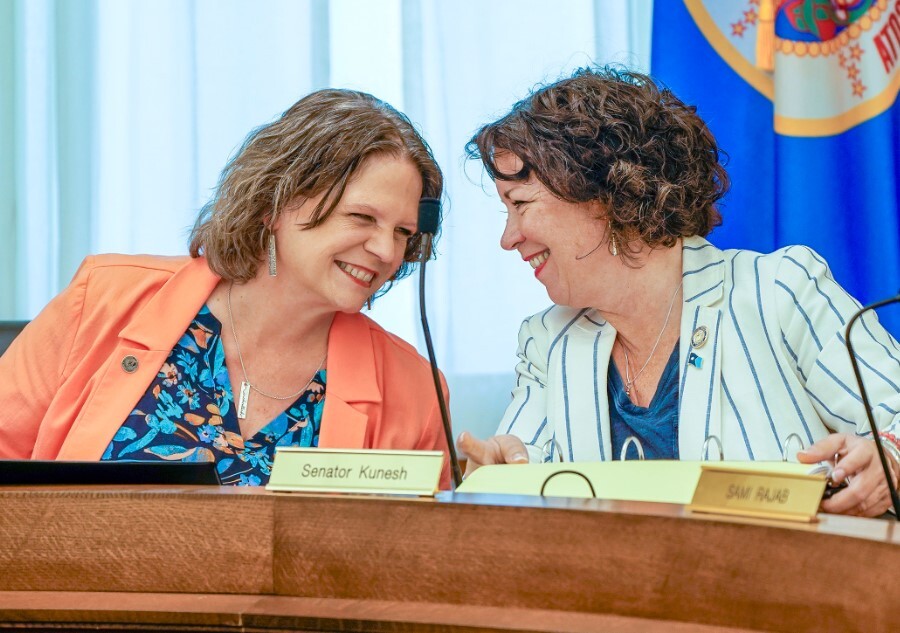
It is an honor to Co-Chair the Education Finance Conference Committee again this session. While this is a supplemental bill, and not as large as last year’s investments, there is still a lot of work for Senator Kunesh and I to do with our fellow conferees. We had our first meeting this morning and will be working through the weekend and into early next week to complete our conference committee report.
You can find information on all of the appointed conference committees here. When you click on the HF/SF link, you can see the conferees, the materials for the conference committee, spreadsheets, the schedule for future meetings, and the video of previous meetings. The materials have a summary of the provisions in the House and Senate bills as well as the complete language lined up side-by-side so that you can see the similarities and differences between the bills. These are the documents that committees use to walk through the bills and come to a consensus on spending and language.
Keep in Touch
Please continue to keep in touch and contact me anytime at rep.cheryl.youakim@house.mn.gov or 651-296-9889. Email is the quickest way to get in touch.
Thank you for the honor of representing our Hopkins, St. Louis Park, and Edina neighbors at the State Capitol.











Recent Comments